A rug links separate pieces into one setting. Choose its relationship with the furniture first, then refine the colour, texture and pattern. It is also the fastest piece to get wrong by photograph: colour shifts, pile disappears, and scale is impossible to judge from a screen. Treat references as the start of the conversation, and let a taped outline on your own floor make the final decision.
The references show design directions. Sizes, construction, materials and project scope are confirmed for your order.
01
Texture seen close up.
A raised organic pattern
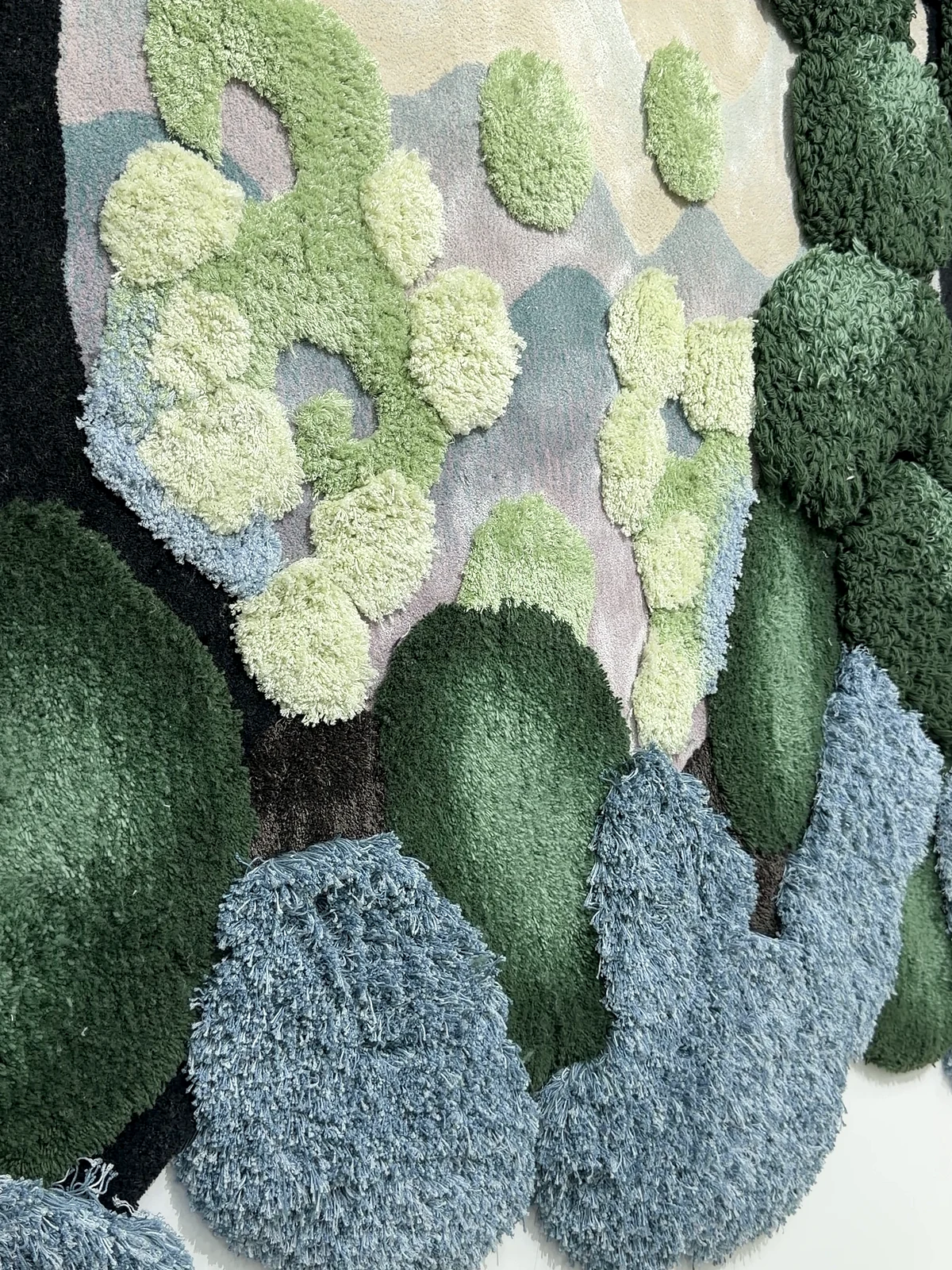
Green, grey and pale areas create depth through an organic raised pattern. Use this close reference to discuss texture and palette. Texture at this level changes how a room feels underfoot and how light plays across the floor through the day — a calm background from a distance, and a rich surface up close.
For your layoutRequest a physical sample to review feel, composition and cleaning requirements, and view it beside the room's flooring and upholstery.
The vertically displayed leaf-like form offers a clear view of the pattern. Translate the visual idea to a floor plan before deciding how it fits a room. A shaped rug makes its own composition, so plan what it anchors: it can define a reading corner or a child's area inside a larger room without any furniture moving.
For your layoutReview the actual floor dimensions and furniture footprint; display orientation does not establish placement, so mark the shape on the floor before deciding.
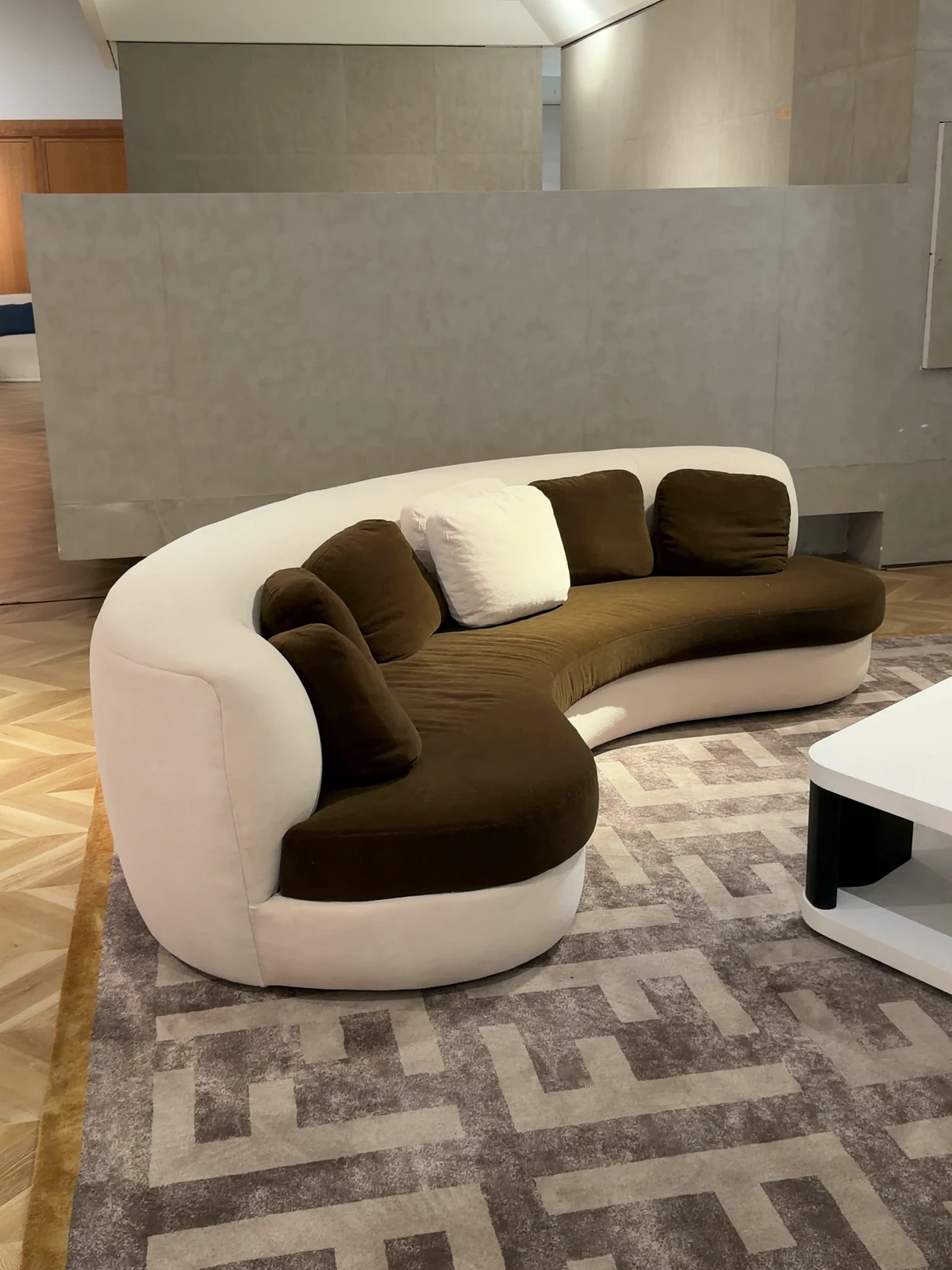
The geometric rug is shown beneath a curved sofa and low table. Use this complete setting to judge how much pattern remains visible. This is the honest way to assess any rug: most of it will live under furniture, so the border and the visible field — not the full design in a product view — are what the room actually gets.
For your layoutCompare the rug boundary with all seat positions and the route around the group, including where chair legs will sit when seats are in use.
A rug links separate pieces into one setting. Choose its relationship with the furniture first, then refine the colour, texture and pattern. It is also the fastest piece to get wrong by photograph: colour shifts, pile disappears, and scale is impossible to judge from a screen. Treat references as the start of the conversation, and let a taped outline on your own floor make the final decision.
01
Furniture footprint
Mark the sofa, chairs and tables together. For dining, consider chair movement as well as the table. Planning example: 'front legs of sofa and chairs on the rug, dining chairs free to slide' is a placement rule you can test with masking tape on the floor in ten minutes — cheaper than any return.
02
Doors & floor junctions
Check door clearance, thresholds and changes in floor level before confirming pile and edge details. A door that shaves a rug every time it opens will wear a line into it within a season, so this measurement belongs at the start, not the end.
03
Care in real life
Discuss cleaning routines, pets and daily traffic. Confirm composition and care instructions for the selected rug, and be realistic: a pale, high-texture rug in a busy family entrance is a commitment, while the same rug in a quiet bedroom is a pleasure.
SEE IT IN CONTEXT
Explore the showroom in motion.
Rug displays, colour selection and selected workshop finishing activities.
Start with the arrangement it will connect. Send the furniture plan so the rug edges can be reviewed around seating, beds or moving dining chairs. If you are between two sizes, choose by the furniture rule you want — legs on, or legs off — rather than by the room's full dimensions.
Can I confirm the texture from a video?+
Video helps with the visual direction and how the pattern moves in light. Request a physical sample and the actual composition and care details before confirming the feel — pile, weight and backing are all invisible on screen.
Can a rug be ordered with the rest of a room's furniture?+
Yes, and it often should be: the rug's palette and texture answer the sofa, chairs and tables around it. Include the rug in the room's reference set from the start, and its size can be reviewed against the same furniture plan as everything else.