Furniture planning guide
What Is the Furniture Centre of Foshan?
The short answer is a district, not a building.
The question assumes a building. Buyers search for the furniture centre of Foshan expecting one exhibition complex with one address, and the town of Lecong happily plays that part in photographs — landmark halls, rows of furnished showrooms, a skyline of furniture malls. But the centre that the trade actually means is bigger and less photogenic: Shunde District, where Lecong's trading halls and Longjiang's factories operate as two halves of one system. If you are furnishing a project from Foshan, that district — not any single mall — is the centre you are buying from.
Client-project furniture and the making process, filmed in our Foshan showroom and workshop.
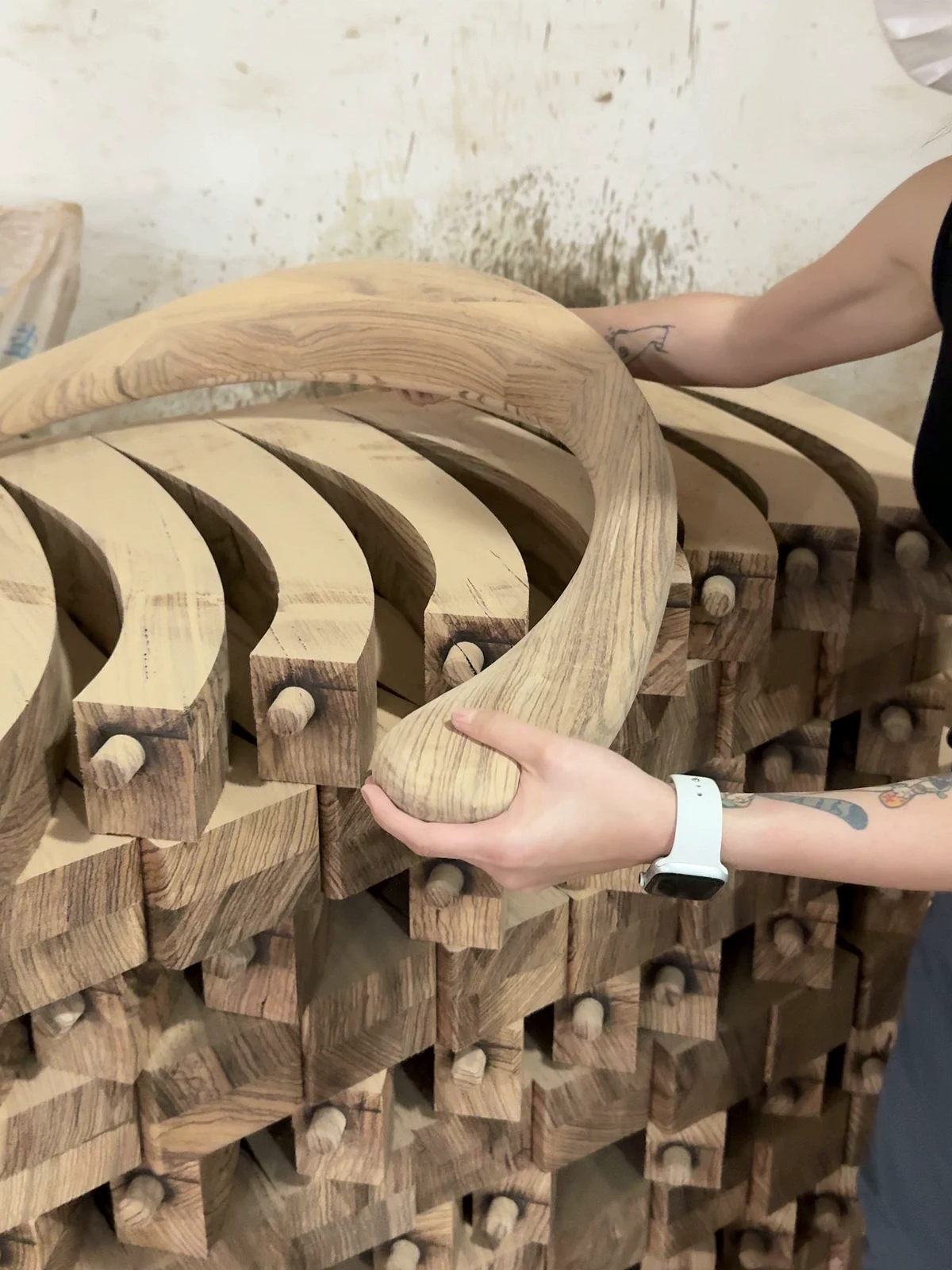
Timber, frames and bench work in a Shunde workshop — the production half of the centre this article describes.
01
Why everyone pictures one building.
Lecong's exhibition halls are designed to be photographed. The landmark complexes present furniture the way a flagship store presents a brand: complete rooms, dramatic lighting, a single impressive address. Search results reinforce the picture, because a hall can be listed, mapped and reviewed in a way a supply chain cannot. So the visible tip of the district becomes, in most buyers' minds, the whole of it.
There is nothing false in the picture — the halls are real, and for many buyers they are the correct first stop. The mistake is only in stopping the definition there, as if the centre ended at the showroom door.
02
What is actually made where.
Walk the system instead of the skyline and the centre resolves into parts. Lecong trades: finished furniture from makers across the region is displayed and sold there. Longjiang, its neighbouring town, manufactures: sofas, upholstered pieces and wooden furniture come off workshop lines there, supported by merchants selling the timber, fabric, foam and hardware those workshops consume. Around both, the wider Shunde district carries the services a furniture trade accumulates — packing, warehousing, freight forwarding and export handling.
03
How the belt grew into the centre.
The two neighbouring towns developed complementary roles over decades: furniture trading in Lecong, and furniture production and materials in Longjiang. In 2004, Lecong received the China Furniture Trade Capital title. The China National Furniture Association records Longjiang receiving its furniture manufacturing and materials titles in 2005, and later describes an established chain of manufacturers, material suppliers and markets. These records support the picture of a connected cluster; they do not establish a simple sequence in which trade came first and manufacturing followed. For a project buyer, the useful point is the connection between these roles, rather than a single origin story.
Hunan Forestry Administration · 2004 report recording Lecong’s furniture trade title
04
What the hub's depth means for project sourcing.
It means a project buyer is not really sourcing from a place, but from a depth of supply. Materials, joinery, upholstery, finishing and export handling sit in one belt, so a specification can move between them without leaving the district: a finish sample is checked against the material merchant's current stock, a joinery detail is settled at the bench that will build it, and the finished goods meet packers and forwarders who handle furniture every week. For custom project work — where drawings change, quantities follow room counts, and several categories must arrive together — that depth is the practical difference between a specification that survives production intact and one that is quietly simplified along the way.
Our own position is the maker's end of that chain: a Foshan factory designing and producing inside the belt, with the halls, materials and freight services of Shunde around us. When buyers ask where the centre of Foshan furniture is, the honest answer we can give is the one this article has described — and it is also, not coincidentally, the reason a specification sent here can be built, adjusted and shipped without leaving the district.
Your planning checklist.
Bring these details into the conversation.
- Treat “the centre” as the Shunde belt, not a single address
- Start in Lecong's halls to set direction for a project
- Identify and vet the maker behind any hall piece before ordering
- Expect materials and components to come from the same belt
- Judge a supplier by their place in the chain, not their showroom size
FOSHANPICK
A clearer brief. A better starting point.
FoshanPick is a furniture manufacturer with our own factory in Foshan. We design and make sofas, beds, dining tables and cabinetry for hotel, apartment and villa furniture projects, with quality control and export services. Share your plans, quantities and destination so we can confirm the furniture scope for your project.
Share your project briefBefore you choose.
So is Lecong the furniture centre of Foshan?
Lecong is the centre's showroom face — the trading half, and the part most people see. The working centre is Lecong together with Longjiang's factories and the supply towns around them. An order that only touches Lecong has used half of what the centre offers a trade buyer.
We're sourcing a project from overseas. Where do we start with the belt?
Start by mapping the project, not the journey. List the categories the project needs, then use the belt's structure: Lecong's halls to benchmark range and styling, Longjiang's workshops as the production counterparties for each category, and the makers themselves — licence, live line checks, first-piece approval — as the parties you vet and contract. If your team does visit, the trip then runs on a trade agenda: direction in the halls, verification in the workshops.
Sources and further reading
These references support the planning questions in this guide. They do not identify the materials, mechanisms or specifications of the furniture filmed here.
Start with your project list
Send your room list, drawings or reference photos to discuss custom furniture options and a quotation.