Furniture planning guide
How to Choose a Furniture Manufacturer in Foshan: A Buyer's Vetting Checklist
Trust is a set of checks, not a feeling.
We are a Foshan factory, so this checklist is written from the other side of the table. These are the checks we expect a serious trade buyer — an importer, a developer, a hospitality group — to run on us — and the ones we would run ourselves before trusting another maker with part of an order. None of them requires industry contacts or a trip, although a trip helps. What they require is the willingness to ask for evidence instead of reassurance, in a fixed order, before any deposit makes the questions awkward.
Client-project furniture and the making process, filmed in our Foshan showroom and workshop.
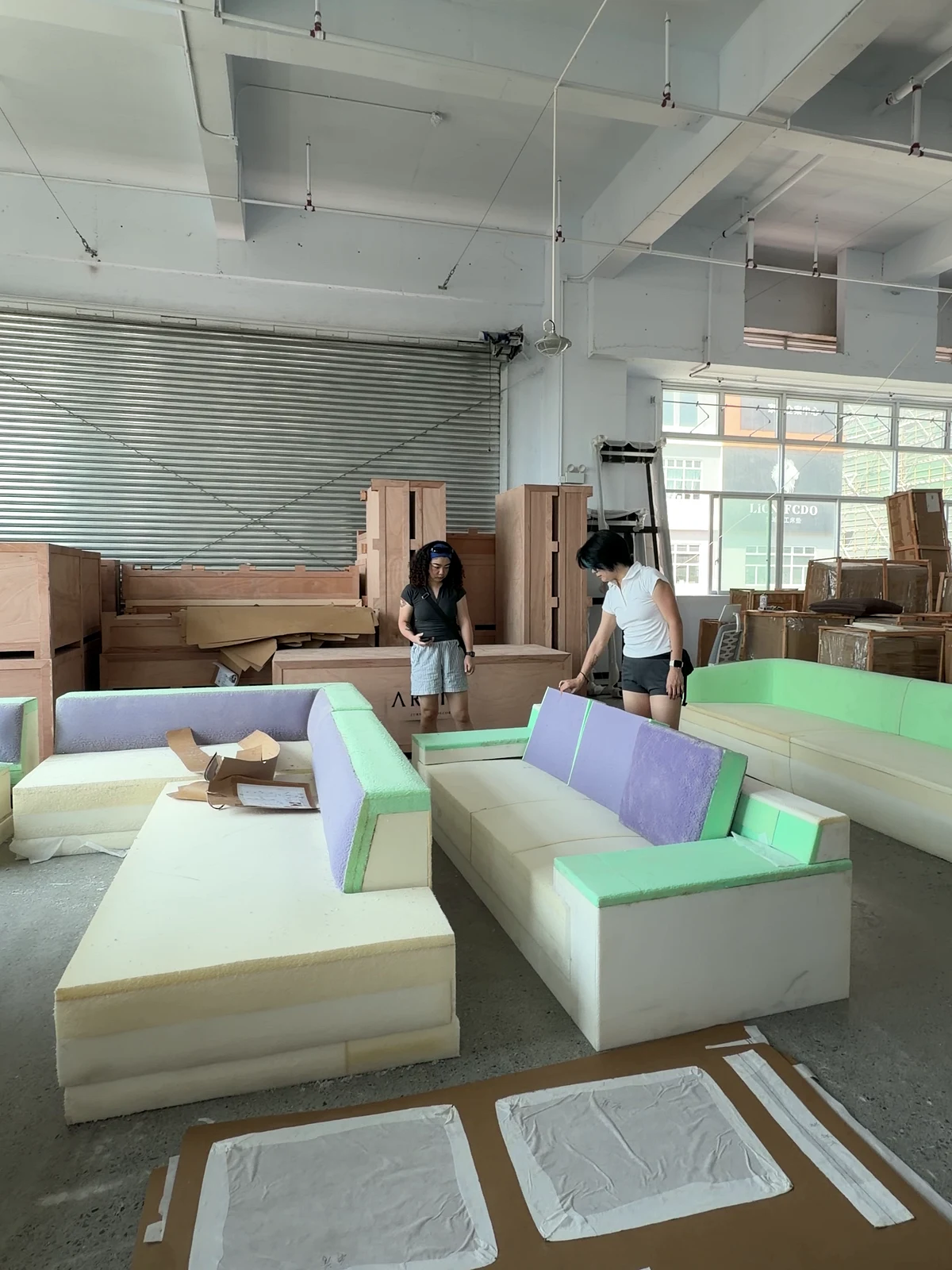
Upholstery frames, foam and finishing stages under review in the workshop — the evidence this checklist asks a buyer to look for.
01
Check the registration before the range.
Start with the least glamorous document in the process: the business licence. A real manufacturer has one, in the name of the company you are dealing with, and will send it without drama. The check is not the document itself but the consistency around it — the registered name, the name on the contract and the name on the account receiving your payment should be one and the same. When those three names drift apart, every later promise becomes harder to enforce, however good the furniture looks.
02
See the line that will make your order — live.
Every supplier in Foshan can send beautiful films. Edited video shows a factory at its best angle on its best day, and it proves only that a camera once visited. A live walk-through is a different instrument: ask for a video call from the workshop floor, and direct it. Turn left at the frame benches. Show the upholstery stage for the category you are buying. Read the label on that packed piece. A working line answers these requests without preparation, because nothing has to be arranged — the work is simply there.
What you are looking for is your category, actually in production: frames for the chairs you are ordering, not a borrowed hall of finished pieces. Showrooms and sample rooms have their place in the process, but they are evidence of taste, not of manufacture.
03
Use the first piece as the audit.
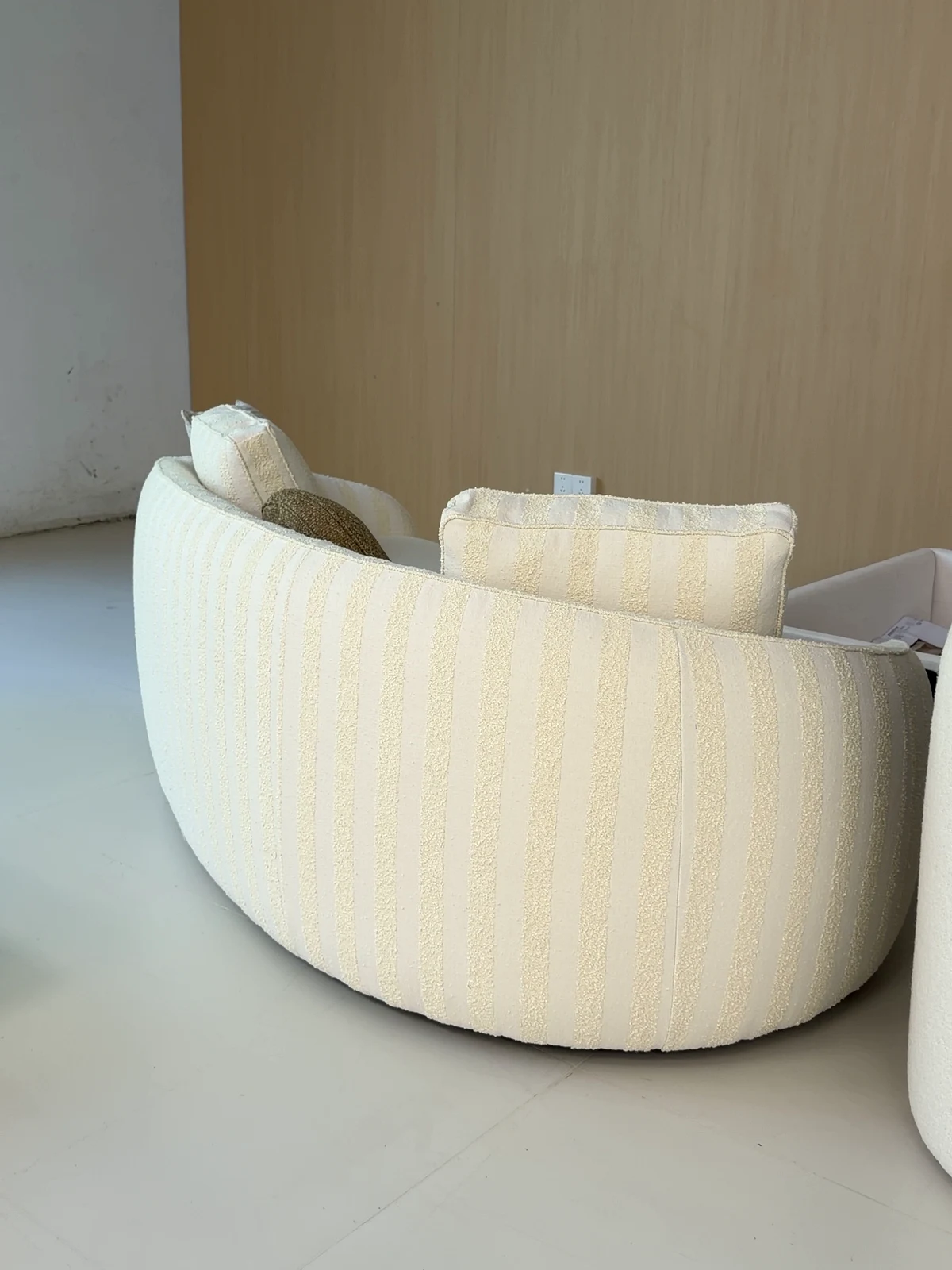
However a maker structures samples, the first physical piece of your actual specification is the most honest document in the relationship. Agree the specification in writing — dimensions, materials, finish, hardware — then have one piece produced or prepared to that specification and checked against the writing before the batch proceeds. Colour under your light, comfort in a real sit, the finish beside materials already chosen in your project: these are first-piece questions, and they are far cheaper to settle on one piece than on a container of them.
Record the approval when it happens: which piece, which specification, what was accepted. That short record is what both sides will reach for when the produced batch is checked — and a maker who welcomes the record is telling you something about how the batch will go.
04
Keep third-party inspection open.
A buyer may appoint an independent inspector to check goods before shipment — quantity, workmanship, materials and packing against the approved specification. This is a normal part of furniture trade, and the vetting value lies in the reaction: a manufacturer who accepts inspection, and accepts it written into the order paperwork, is planning to be checked. A manufacturer who resists access, or wants the goods fully packed before anyone independent sees them, has answered your checklist for you.
05
Ask for dated delivery records, not adjectives.
Every supplier in the world is “experienced” and “reliable”; the words cost nothing. Records cost a little more to produce, which is why they mean more. Ask to see evidence of recent deliveries with dates on it: packing photographs from a named week, a loading record, the delivery paperwork trail for a comparable order. You are not asking for another client's private details — product type and dates are enough — you are checking that the factory's present tense is real: goods like yours, finished and shipped, recently.
06
Read how the maker handles the hard questions.
Finish the vetting with the questions that have no comfortable answer. Ask what happens when a check fails. Ask how destination rules are handled — certain engineered-stone products, for example, are prohibited imports in Australia, so who checks the actual material, and when? A maker who answers these questions plainly, early, is showing you the behaviour you will get when something genuinely goes wrong mid-order. Evasiveness at the easy stage is the most reliable forecast available to you.
Your planning checklist.
Bring these details into the conversation.
- Business licence in the same name as the contract and the payment account
- Live, directed walk-through of the line that makes your category
- First piece of the real specification checked and approved in writing
- Third-party inspection accepted and written into the order
- Dated packing or loading records for recent deliveries seen
FOSHANPICK
A clearer brief. A better starting point.
FoshanPick is a furniture manufacturer with our own factory in Foshan. We design and make sofas, beds, dining tables and cabinetry for hotel, apartment and villa furniture projects, with quality control and export services. Share your plans, quantities and destination so we can confirm the furniture scope for your project.
Share your project briefBefore you choose.
Can this vetting be done without travelling to Foshan?
Yes. A licence scan, a live unscripted video call on the production floor, a first piece checked against the written specification, and an inspector working near the factory cover the same ground as a visit. Travel adds feel — the scale of a workshop, the confidence of meeting people — but it does not change which facts matter.
What is the single strongest warning sign?
A supplier who will show you everything except the workshop that makes your category. Showrooms are easy to rent and easy to photograph; a working line, staffed and mid-order, is neither. When access to production is the one thing that keeps being postponed, the postponement is the answer.
Sources and further reading
These references support the planning questions in this guide. They do not identify the materials, mechanisms or specifications of the furniture filmed here.
Start with your project list
Send your room list, drawings or reference photos to discuss custom furniture options and a quotation.