Furniture planning guide
Foshan's Furniture Belt: A Trade Briefing for Project Buyers
One district, two functions: trade in one town, production in the next.
Trade buyers searching for “the Foshan furniture market” usually picture a single destination. What they are actually buying into is a belt: a run of towns in Shunde District where furniture is traded in one town and produced in the next, with the materials and export services both depend on spread around them. We work inside that belt, and this briefing sets out how it is organised — because for a project order or an import programme, the structure of the belt decides who your real counterparties are.
Client-project furniture and the making process, filmed in our Foshan showroom and workshop.
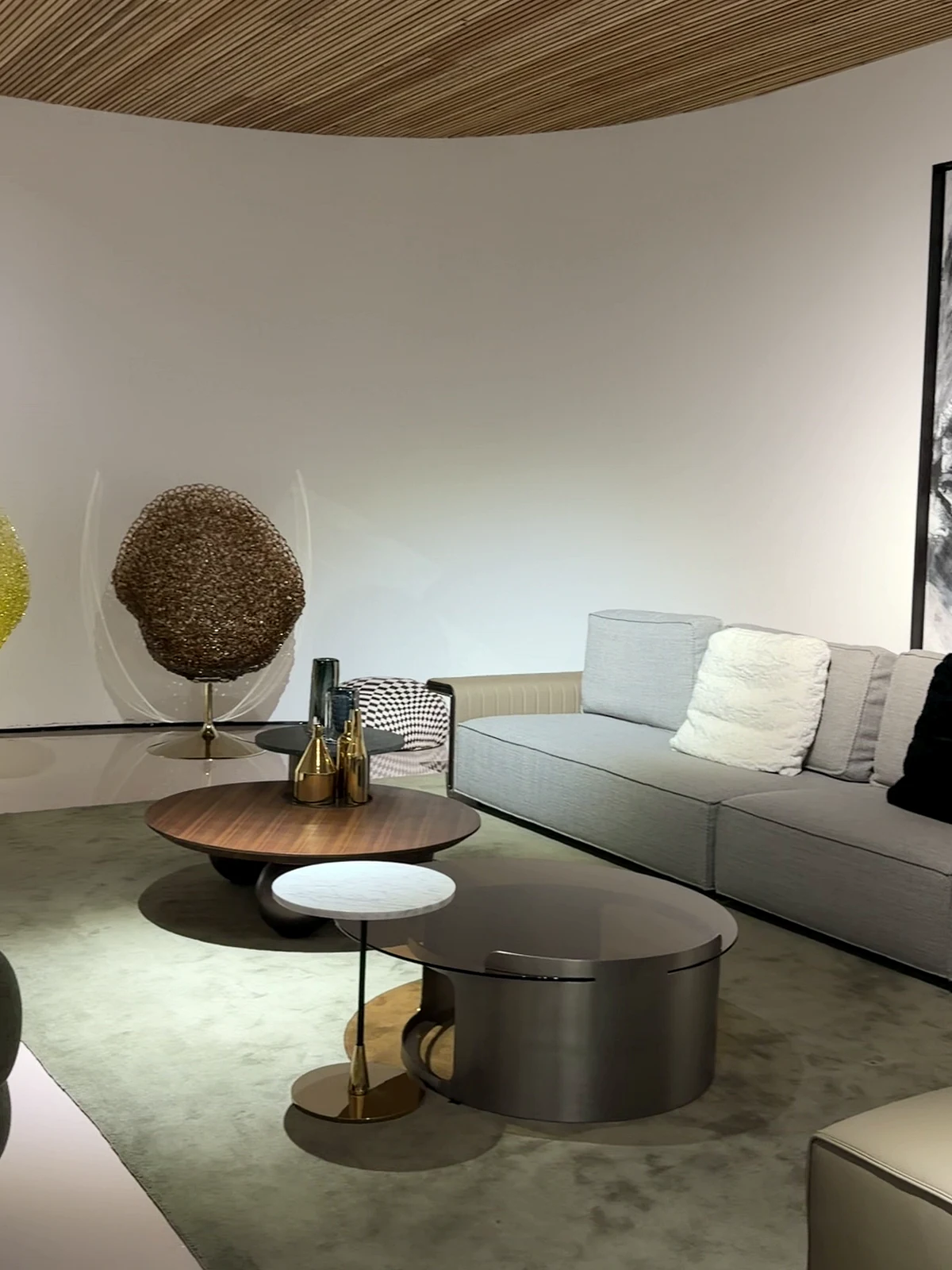
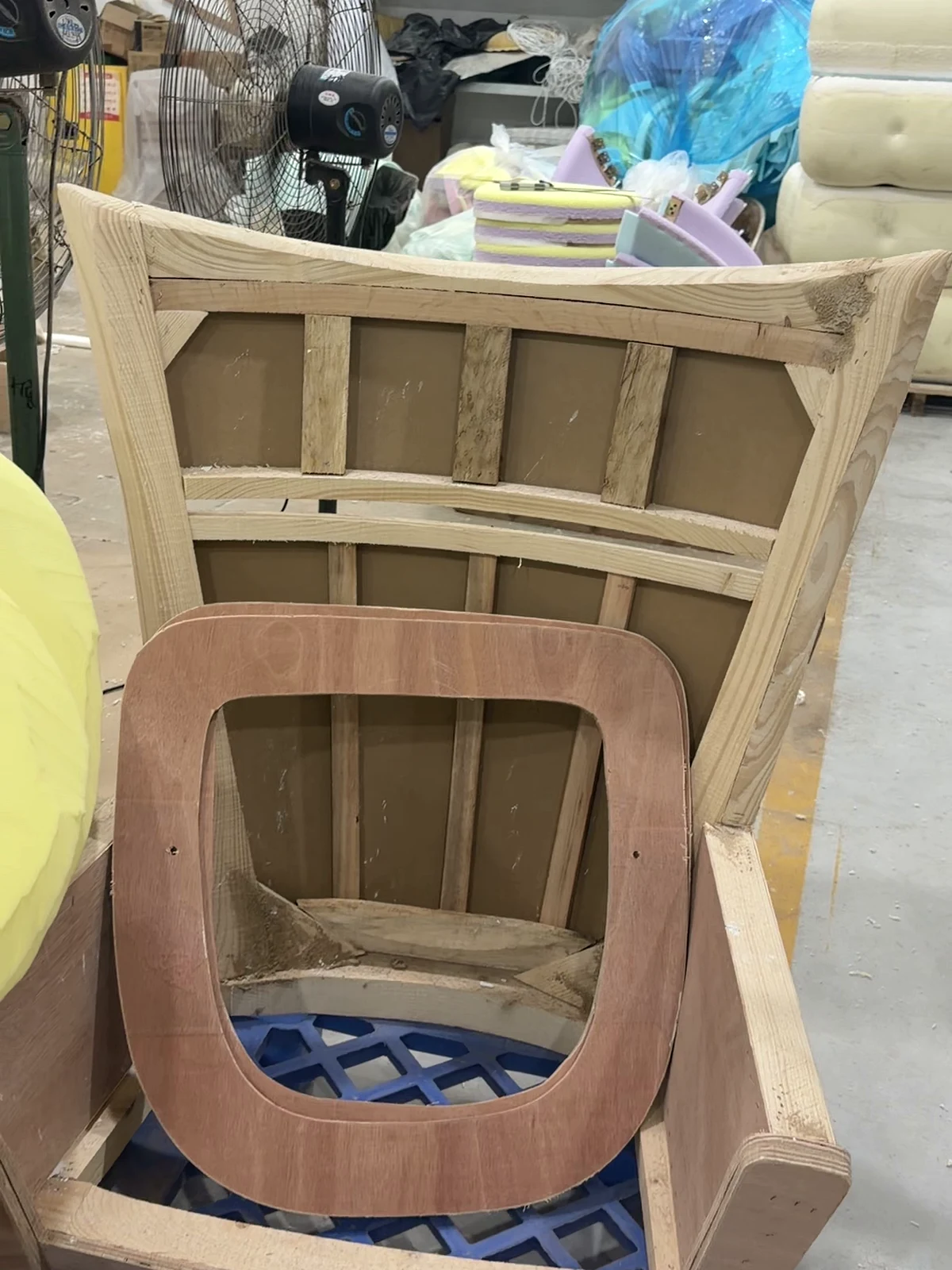
Trading halls and workshop benches in the Shunde furniture belt — the two settings a trade buyer should read very differently.
01
The distinction that organises the belt: trade in Lecong, production in Longjiang.
Lecong is the trading town. Its halls and malls line the highway with finished rooms — sofas, dining sets, beds and cabinets presented as complete interiors, offered by trading companies and factory showrooms alike. A short drive away, Longjiang is the production town: workshops turning out sofas, upholstered pieces and wooden furniture, and the material merchants who feed them. The two towns are neighbours in the same district, and most sourcing problems we see begin with a buyer treating a trading floor and a factory as interchangeable counterparties. They are not.
Consider an importer building a guestroom programme. In a Lecong hall, the casegoods and seating on display come from several different makers, each with its own production standards and order terms — the hall is where the range is compared, not where it is made. The same programme placed directly with the workshops that produce each category runs on written specifications, first-piece checks and one accountable maker per category. Same furniture belt, two very different supply relationships.
02
What the trading halls are for — and what they are not.
For a trade buyer, Lecong's halls are a range library. They are the quickest way to see what the belt currently produces, compare styling and construction across many makers in a day, and fix the direction of a project specification before it is written. Developers and hospitality buyers use them to benchmark: this is what the market offers at display level, in this season, in these materials.
What a hall cannot give you is a production commitment. A displayed piece describes itself as displayed; it does not state who will make your version, to what specification, or under whose quality control. Display stock and made-to-order production are different offers, and the terms of one say nothing about the other. Professional buyers therefore treat every hall shortlist as a set of references to be traced back to a maker — not as an order waiting to be signed.
03
Where production concentrates: Longjiang's workshops.
Longjiang's value to a project buyer is concentration. Sofa and upholstery production, frame making and wooden furniture workshops sit alongside the merchants who supply their timber, fabric, foam and hardware. When a custom specification needs an adjustment — a revised frame dimension, a substituted fabric, a different finish — the inputs are inside the same town, which can simplify coordination; the time needed still depends on the material and the agreed work. This is why the belt can absorb the variation that project work generates: no two hospitality or residential projects specify alike, and the production base is organised around that fact.
04
The supply chain around both towns.
Neither town works alone. Around them sits the rest of the Shunde cluster: timber, fabric, foam, hardware and stone merchants, plus the packing, warehousing, freight forwarding and export services a furniture trade accumulates. For an importer, that depth shows up as resilience. A material that fails a check can be re-sourced within the belt; export documentation and container handling are routine work for the firms around the workshops, because they do it every week for the same categories of goods.
Our factory sits inside this belt, and it shapes how we take project work: design and production happen surrounded by the trades our pieces depend on, so a specification can be built, adjusted and readied for export without leaving the district. That — not any single hall — is the asset a trade buyer is actually sourcing from Foshan.
05
How trade buyers evaluate the belt.
Experienced buyers read the belt as a map of counterparties. For each category in a project — casegoods, seating, joinery, stone — they identify the actual maker, check that maker's production evidence, and keep trading companies in their proper role: useful for range and comparison, accountable only for what they themselves control. The questions are structural. Who makes this category? Where is that workshop? What has it shipped recently, and can that be shown with dates?
The belt rewards that reading. Its concentration means a buyer can assemble a whole project inside one district — but only by placing each part with the party that actually produces it. That is the difference between sourcing from Foshan as a trade buyer and merely buying through whoever happens to be standing in the hall.
Your planning checklist.
Bring these details into the conversation.
- Map each project category to the party that actually produces it
- Use Lecong's halls for range and benchmarking, not as production counterparties
- Ask every supplier which parts of an offer are made in their own workshop
- Check production evidence — frames, materials, benches — for your categories
- Confirm who handles packing, export documents and loading, and for which goods
FOSHANPICK
A clearer brief. A better starting point.
FoshanPick is a furniture manufacturer with our own factory in Foshan. We design and make sofas, beds, dining tables and cabinetry for hotel, apartment and villa furniture projects, with quality control and export services. Share your plans, quantities and destination so we can confirm the furniture scope for your project.
Share your project briefBefore you choose.
For a project order, should we work through a Lecong trading company or directly with a factory?
It depends on what you need the counterparty to control. A trading company can assemble range across many makers, which suits comparison and small mixed orders. A factory controls specification, production sequence and quality for its own categories, which is what a project order usually depends on. Many trade buyers use both: halls and traders for direction, factories for the categories that carry the project's risk.
Can one supplier in the belt handle a whole project across categories?
Sometimes — but the honest answer is a map, not a yes. Ask the supplier to state, category by category, what is produced in its own workshop and what is bought in from partners in the belt. A supplier who draws that map clearly can coordinate a project credibly; one who claims everything is in-house, in a belt organised around specialisation, is telling you something else.
Sources and further reading
These references support the planning questions in this guide. They do not identify the materials, mechanisms or specifications of the furniture filmed here.
Start with your project list
Send your room list, drawings or reference photos to discuss custom furniture options and a quotation.