Furniture planning guide
Apartment Projects: Planning Furniture for Repeated Rooms
Fifty similar rooms are one decision, repeated.
An apartment project looks like a furnishing problem and behaves like a documentation problem. The fiftieth room is easy; what is hard is keeping the fiftieth room the same as the first — and knowing exactly where it is allowed to differ. That is a planning task, and it starts with a standard room, not with a purchase order.
Client-project furniture and the making process, filmed in our Foshan showroom and workshop.
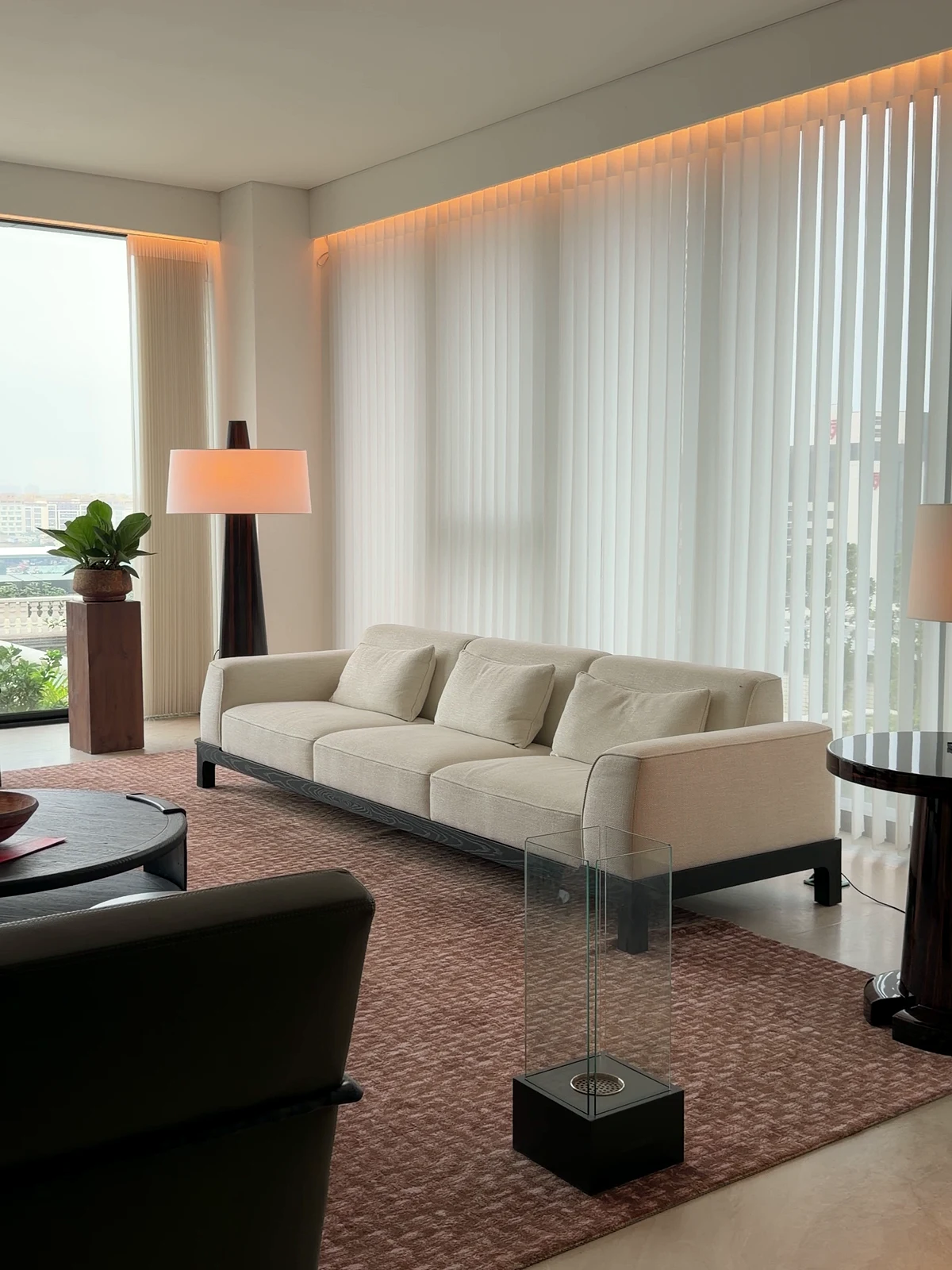
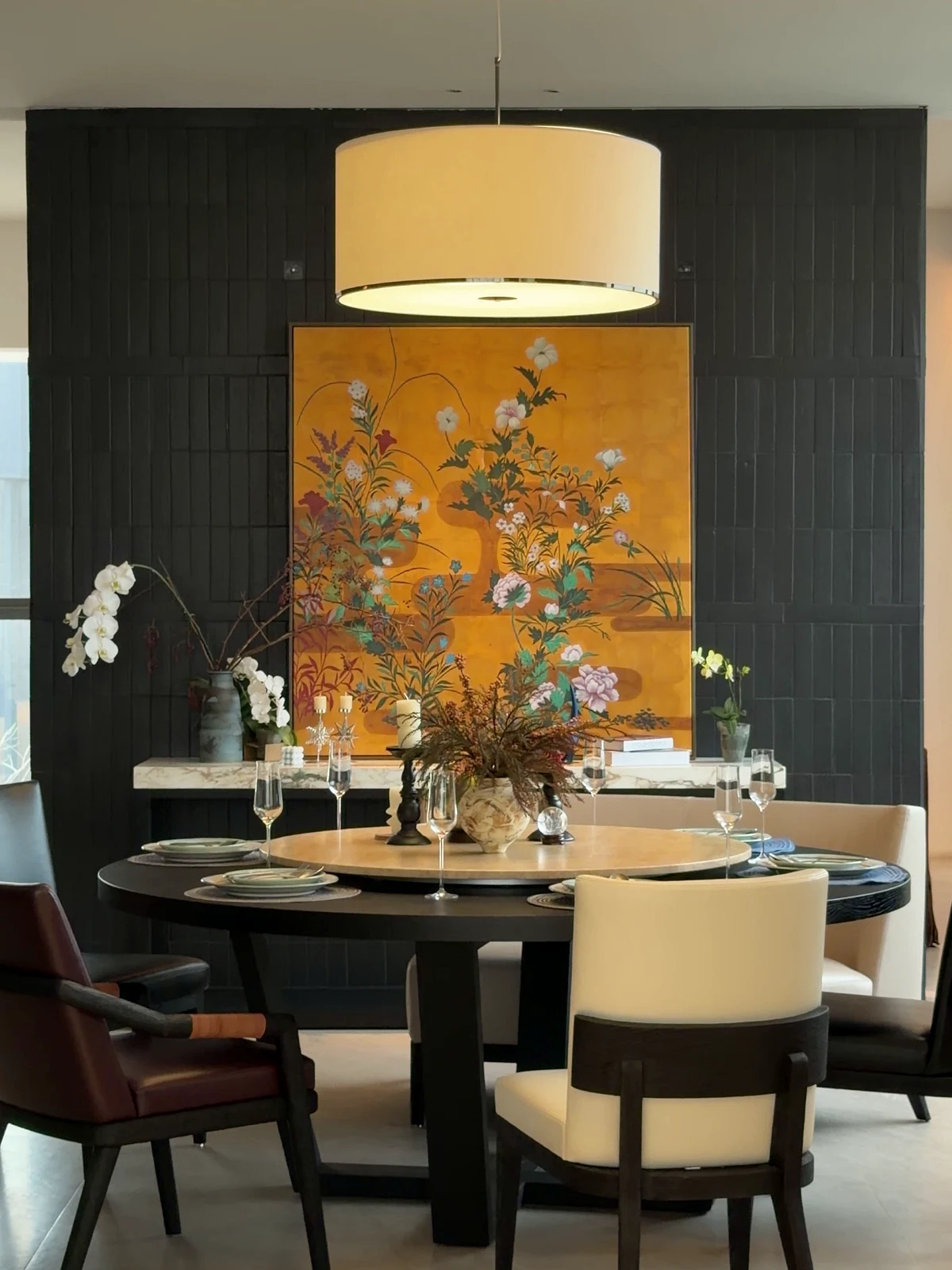
Living, dining and furniture-detail showroom references for discussing room types and shared finishes.
01
Settle one standard room properly.
Choose the most typical unit and plan it completely: furniture positions, clearances, finishes, the pieces that repeat and the pieces that do not. Every doubt gets answered in this room, on paper, while changing an answer costs nothing. A standard room settled loosely becomes a loose standard repeated at scale.
02
Record variations as differences, not new rooms.
Corner units, mirrored layouts, accessible units: most projects hold a handful of genuine variations. Record each as a short list of differences against the standard room — what moves, what mirrors, what changes size, what stays identical. A variation written as a difference list can be checked in minutes on site.
The failure mode to avoid is the silent variation: a room type that drifted during planning and exists only in someone's memory. If a difference is not written in the variation list, the project will eventually build the standard room there and discover the problem with furniture on site.
03
Keep quantities attached to decisions.
A quantity is only as reliable as the decision behind it. Keep the count inside the room-type record, where the decision lives — a line might read: “Type A × 24 — desk chair finish confirmed in sample round one; Type A corner × 6 — desk position mirrored, chair unchanged.” When a finish changes, the record shows every room and every count the change touches, instead of leaving a spreadsheet to be reconciled later.
04
Accept rooms against the record, not against memory.
When furniture arrives, check each room against its type record and its variation list. Rooms that match the standard should take minutes; the time saved belongs to the variation rooms, which deserve a slower check. A short acceptance note per room type closes the loop that the standard room opened.
Your planning checklist.
Bring these details into the conversation.
- One standard room planned and recorded completely
- Variations written as difference lists
- Quantities stored inside the room-type record
- Finishes confirmed per type, not per room
- Acceptance notes kept per room type
FOSHANPICK
A clearer brief. A better starting point.
FoshanPick is a furniture manufacturer with our own factory in Foshan. We design and make sofas, beds, dining tables and cabinetry for hotel, apartment and villa furniture projects, with quality control and export services. Share your plans, quantities and destination so we can confirm the furniture scope for your project.
Share your project briefBefore you choose.
Why not simply copy the first finished room?
Because the first room hides its own decisions. A copied room reproduces what was done, including the workarounds nobody wrote down. A recorded standard room reproduces the decisions — and the variation list shows where copying would be wrong.
When does a variation deserve its own full record?
When it changes a dimension, a position or a piece of furniture — not when it only changes a view or a wall colour. Three full records maintained honestly will serve a project better than twelve types that exist only as names in a spreadsheet.
Sources and further reading
These references support the planning questions in this guide. They do not identify the materials, mechanisms or specifications of the furniture filmed here.
Start with your project list
Send your room list, drawings or reference photos to discuss custom furniture options and a quotation.