Furniture planning guide
Round or Rectangular Tables in Project Dining Areas: Choose by Clearance, Seating Module and Service Route
The table shape is chosen by the route around it, not by its outline.
A dining area is laid out with round tables to make the seating feel generous. Then service starts, and on the shortest passage between the kitchen door and the room, the chairs pushed back from two neighbouring round tables bulge into the route; the service trolley cannot pass while guests are seated. The tables fit the room — the arrangement did not fit the service. This guide selects round or rectangular tables for restaurants, banquet rooms and show-unit dining areas by clear passage, seating module and service route, and writes the chosen shape into the layout before tables are ordered in quantity.
Client-project furniture and the making process, filmed in our Foshan showroom and workshop.
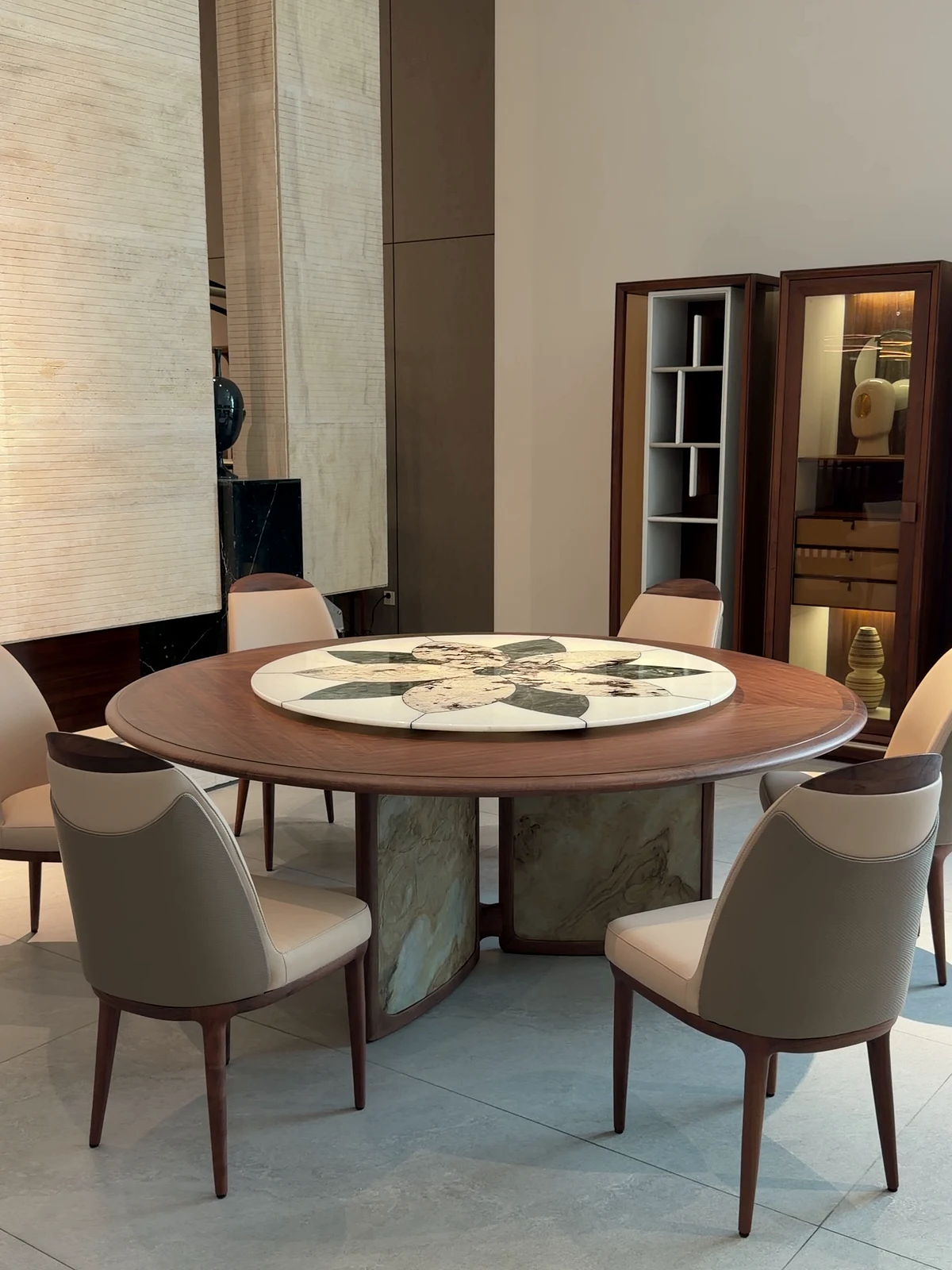
Two table shapes, filmed in separate showroom settings.
01
Draw the service route before the table shape.
Start the plan with the room boundaries, doors, the kitchen pass or servery, side stations and the routes staff and trolleys actually use. Add the tables with the actual chairs, and draw every chair both tucked in and pushed back as a seated guest would leave it. The clear passage that matters is the one remaining between pushed-back chairs, not between tabletops.
02
Where round tables earn their place.
A round table suits groups that face inward and can be approached from several sides, and it gives banquet layouts a flexible seating module. Check the diameter against the chairs placed around the curve and how the base meets guests' feet. Remember that chairs on a round table push back radially, so they reach into passages on every side — the reason they often fail on a tight service route.

03
Where rectangular tables earn their place.
In a long room, rectangular tables follow the room's direction, keep chairs pushing back along predictable lines and can be joined end to end for larger parties. Test the end seats as carefully as the side seats, and check corner legs, the apron beneath the top and access to adjacent side stations. A nominal seat count leaves these questions open.
04
Write the chosen shape into the layout and test it.
Compare both options on the same plan, with the same chairs and the same covers. Test a guest getting up while a trolley passes on the busiest route, and in a show-unit dining area test a visitor walking round the table while someone is seated. Once a shape is chosen, record the seating module per table and the clear passages on the layout, so later changes are checked against it.
Then confirm overall dimensions, base dimensions and any detachable parts from the product information, and compare the packed pieces with doors, lifts and turns on the delivery route. Room fit and delivery access are separate checks; material and finish come from product information, not from a photograph.
Your planning checklist.
Bring these details into the conversation.
- Service and trolley routes drawn before the table shape is chosen
- Clear passage checked with chairs pushed back
- Seating module per table recorded on the layout
- Table, base and chair dimensions confirmed from product information
- Packed pieces checked against doors, lifts and turns on the delivery route
FOSHANPICK
A clearer brief. A better starting point.
FoshanPick is a furniture manufacturer with our own factory in Foshan. We design and make sofas, beds, dining tables and cabinetry for hotel, apartment and villa furniture projects, with quality control and export services. Share your plans, quantities and destination so we can confirm the furniture scope for your project.
Share your project briefBefore you choose.
Does a round table save space?
Not automatically. Its chairs push back on every side, so the passage between round tables can be tighter than between rectangular ones. Compare both on the same plan with chairs pushed back.
Can the shape be chosen by seat count alone?
No. Seat count says nothing about end seats, legs, aprons or the service route. Choose by the seating module that works on the layout with the route kept clear.
Can one dining area mix round and rectangular tables?
Yes, if both modules are drawn on the same layout and the service route is tested with both in use. Record which positions take which shape so replacements and re-sets follow the plan.
Sources and further reading
These references support the planning questions in this guide. They do not identify the materials, mechanisms or specifications of the furniture filmed here.
Start with your project list
Send your room list, drawings or reference photos to discuss custom furniture options and a quotation.