Furniture planning guide
Accent Pieces in Neutral Project Interiors: Rank the Colour Events Before Production
A neutral background can support a few deliberate points of character — if they are ranked.
A neutral scheme is the most repeated interior decision on a project — show apartments, hotel lounges and villa living rooms all lean on pale backgrounds — and its accents are where repetition usually breaks down. One patterned chair is specified, a cabinet wall is approved in a render, and by the third room the colours have drifted into competition. The method in this guide is to rank the room's colour events before production: record the pale background, give one patterned piece a job, repeat a single colour from it, treat the cabinet fronts as the second event, and hold every later substitution to that ranking.
Client-project furniture and the making process, filmed in our Foshan showroom and workshop.
Pale rooms, patterned seating and differently coloured storage fronts.
01
Record the pale background first.
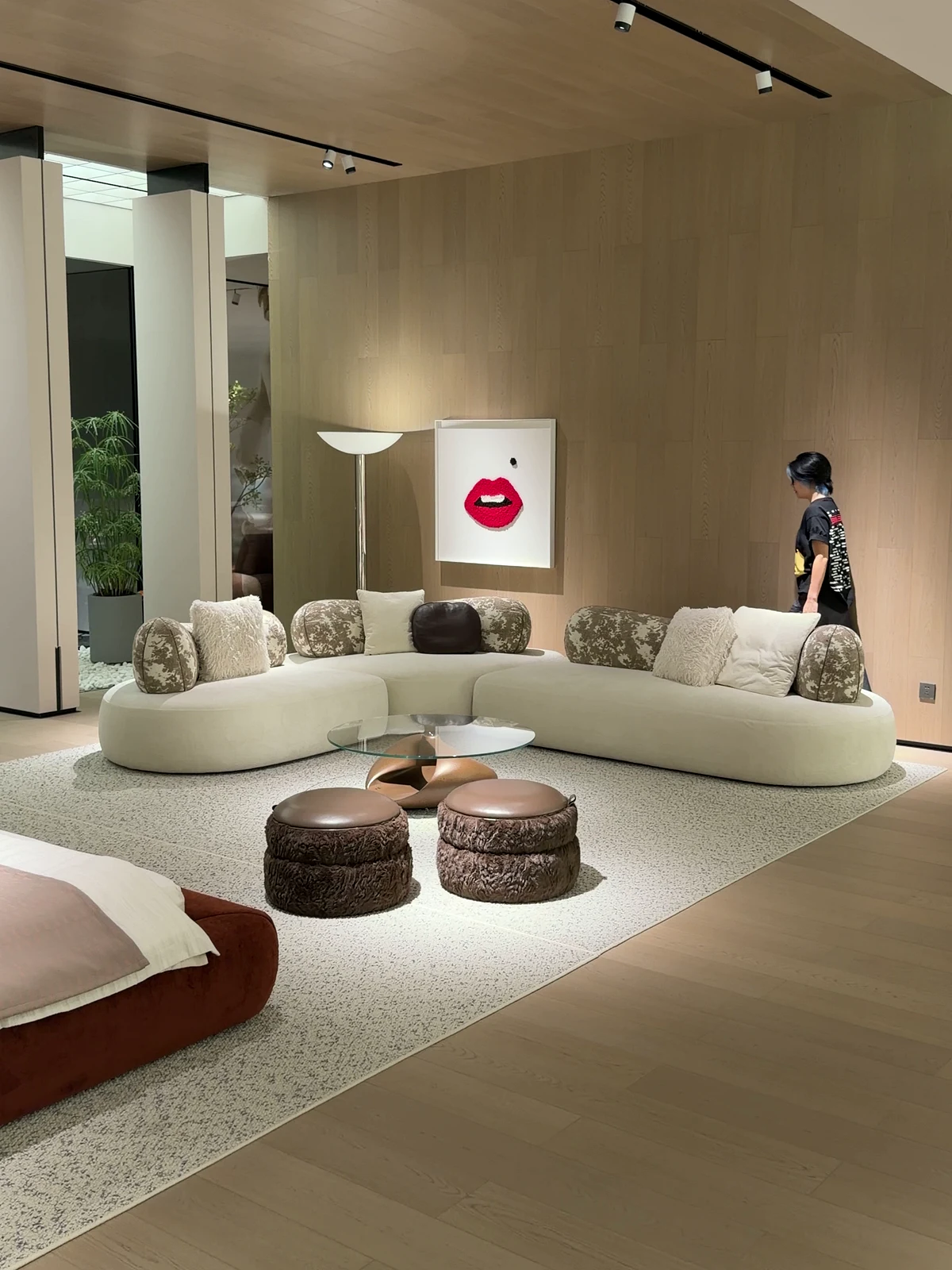
The pale seating, floor and wall tones are the background every other colour will be judged against, so record their actual tones room type by room type — warm white and grey-leaning white take the same accent differently. In the opening reference, the pale arrangement works because the large surfaces stay close in tone. If one existing piece already carries a pattern, count it as a colour event from the start and plan the others around it.
02
Give the patterned chair a job and a position.
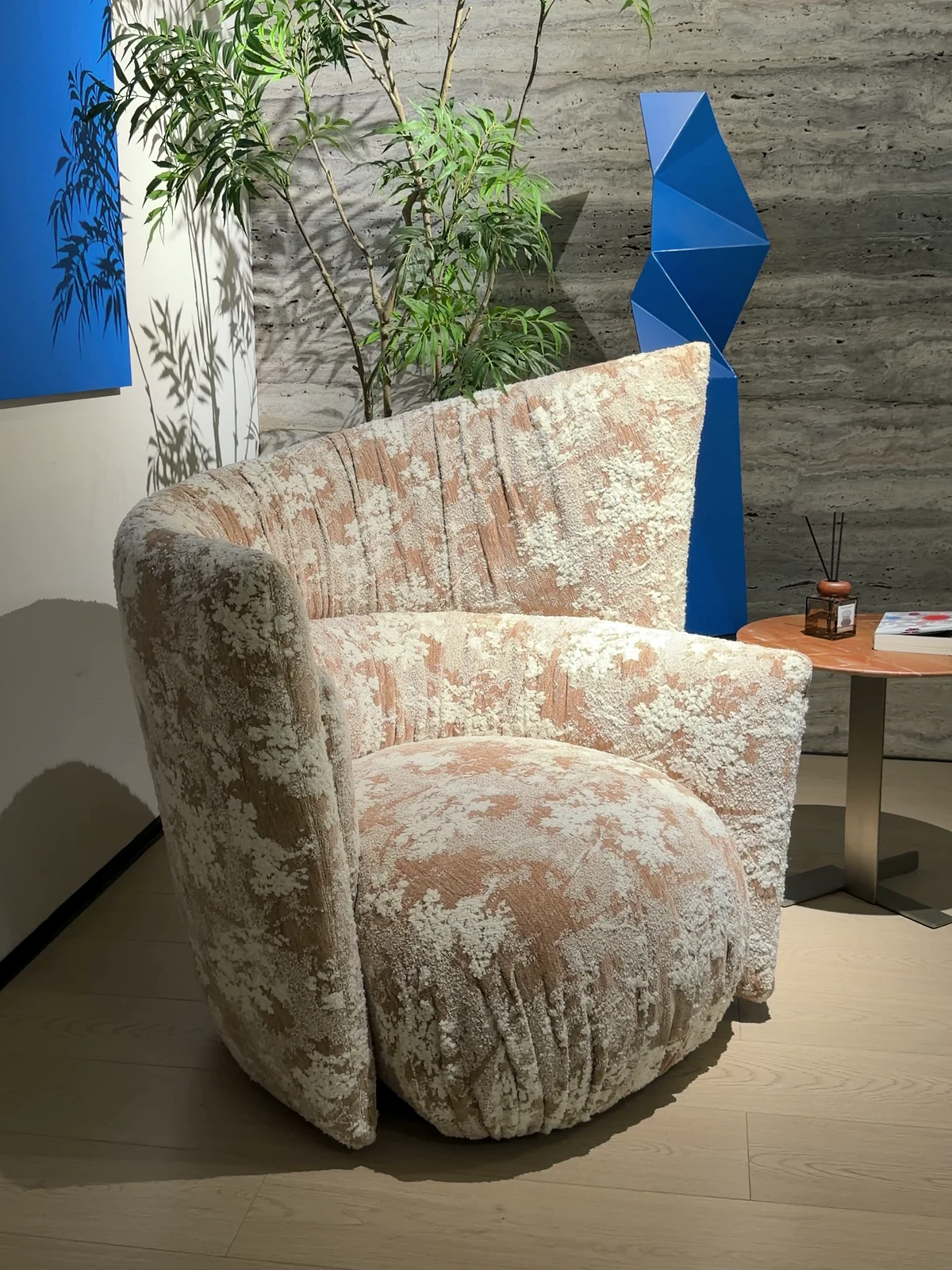
Choose the patterned chair's position by use before judging its print. For example, a single patterned armchair beside a pale two-seat sofa, angled toward the conversation group, can serve as the reading seat and the room's one strong pattern at the same time. Check it is visible from the entrance, does not block the route past the sofa, and leaves a side surface within reach. On a project, that position is drawn once per room type and repeated — the pattern's job should not be renegotiated room by room.
03
Repeat one colour from the pattern, not the pattern itself.
A pattern brings several colours at once. Pick the one you want to hear again — in a cushion, a small table or a single shelf object — and let the others stay inside the chair. Compare the fabric sample against the pale sofa upholstery in the room's own light, and check scale: a large repeat needs the surface beside it to stay plain. Name the chosen colour in the project record; 'the blue from the chair' is not a specification, and exact colour and fibre cannot be settled from a screen reference.
04
Treat the cabinet fronts as the second colour event.
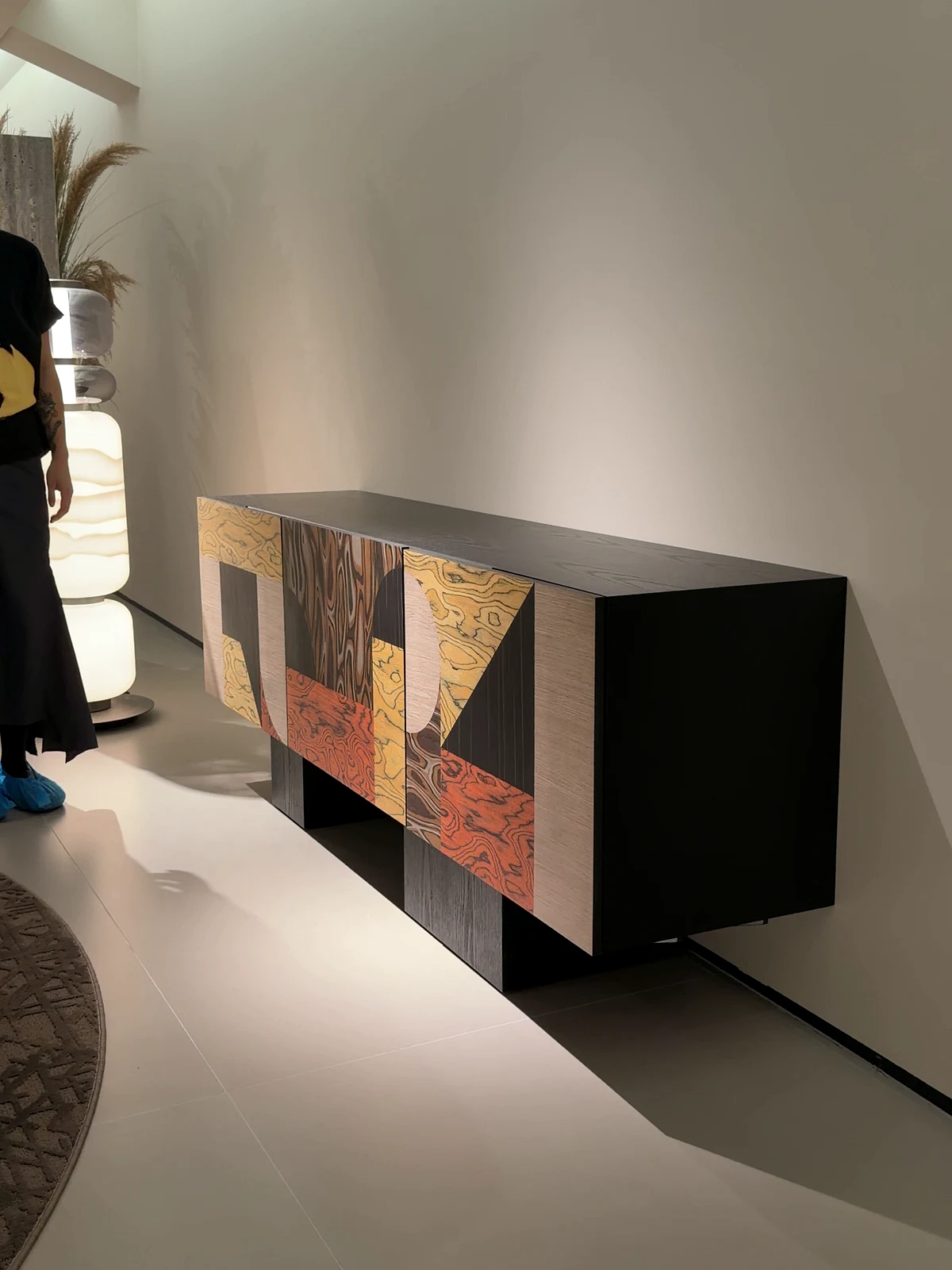
The cabinet in the reference covers far more wall than the chair covers floor, so its colours can afford to be quieter. Decide the order of the fronts — which colour sits at eye level, which at the ends — and judge it with the doors closed, from the main seat. Record the interior layout separately: a pleasing sequence of fronts says nothing about how the compartments open or what they hold. The approved order becomes a production instruction, repeated exactly wherever the cabinet repeats.
05
Count the colour events across the whole space.
In this room the count is two: the patterned chair and the cabinet fronts. If a rug, an artwork or a coloured table would make a third, decide which of the three steps back — usually the one with the smallest everyday role. On a project this count is done per space type, not per delivery batch, so a late-arriving category cannot quietly promote itself into a third event after the ranking was set.
06
Hold substitutions to the hierarchy record.
Finish with a short record: focal piece, the one repeated colour, the cabinet front order and the actual dimensions. Every substitution — a discontinued fabric, a value-engineered cabinet — is then checked against the ranking rather than against taste in the moment. The hierarchy is what makes a neutral scheme repeatable: rooms can change hands, buyers and production batches, and still read as one interior.
Your planning checklist.
Bring these details into the conversation.
- Existing pale surfaces and their tones recorded
- The accent chair's position and everyday job fixed
- One colour repeated from the pattern, the rest left inside it
- Cabinet front order approved with doors closed
- Colour events counted, ranked and held in a project record
FOSHANPICK
A clearer brief. A better starting point.
FoshanPick is a furniture manufacturer with our own factory in Foshan. We design and make sofas, beds, dining tables and cabinetry for hotel, apartment and villa furniture projects, with quality control and export services. Share your plans, quantities and destination so we can confirm the furniture scope for your project.
Share your project briefBefore you choose.
Should the cabinet fronts match the accent chair?
Matching is not required. The fronts cover a larger area, so a quieter colour, or one tone repeated from the chair's pattern, usually sits better. What matters for production is that the order of the fronts is approved with the doors closed and recorded, so the sequence survives repetition across rooms.
Sources and further reading
These references support the planning questions in this guide. They do not identify the materials, mechanisms or specifications of the furniture filmed here.
Start with your project list
Send your room list, drawings or reference photos to discuss custom furniture options and a quotation.