Furniture planning guide
Specifying a Dark Palette with Accents for Hotel and Villa Lounges: Colour as a Production Spec
On screen, dark is a single colour. In production, it is dozens of decisions that must agree.
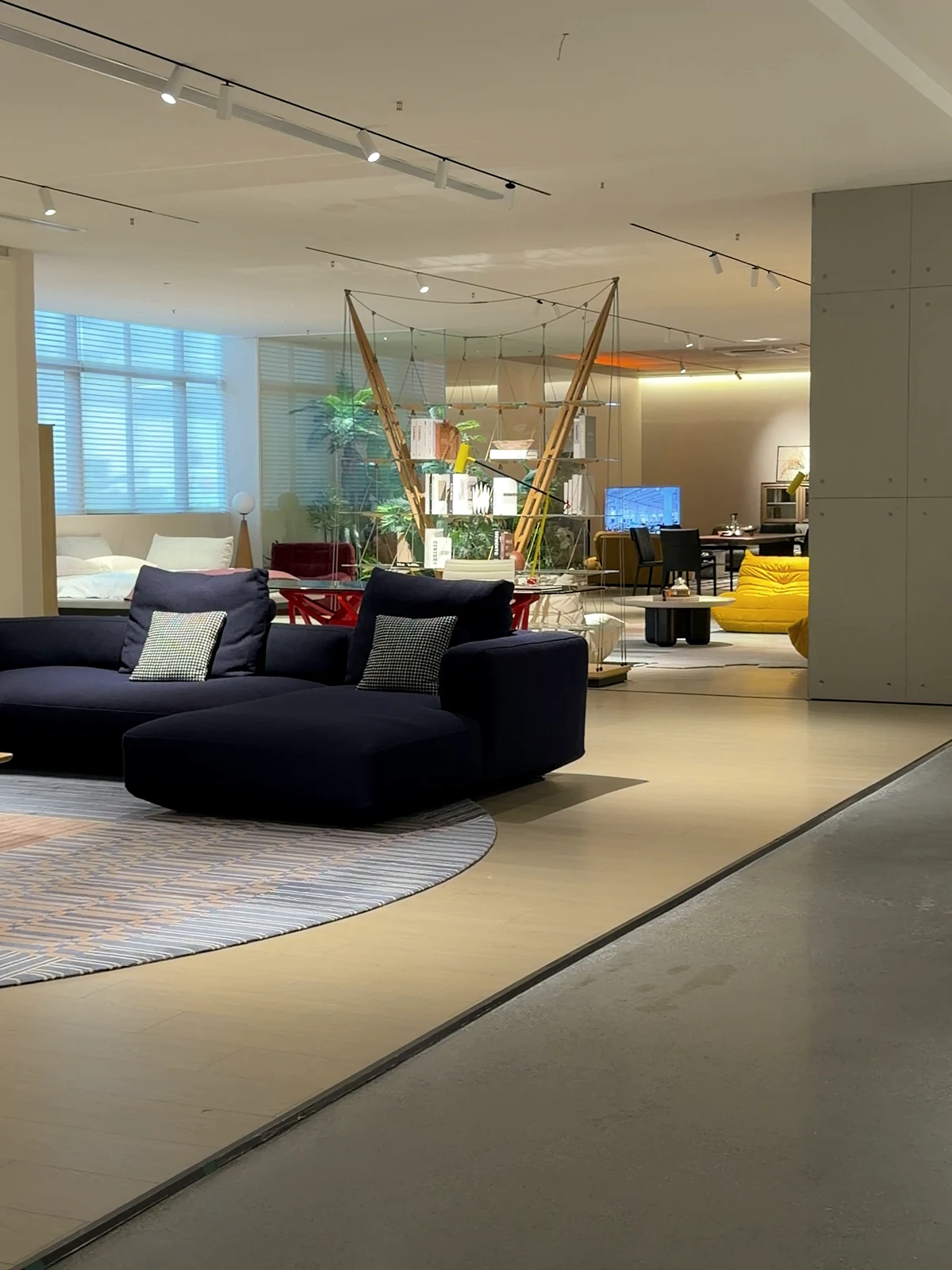
The film pairs a dark seating group with red structural lines and brighter occasional tables — a combination project buyers often ask for in a hotel lounge or a villa living room. What a showroom grouping settles in an afternoon becomes harder across a project: the dark base may run through upholstery, timber finish and cabinetry at once, and the accent has to repeat, piece after piece, possibly across separate production batches. Read as a specification problem rather than a styling one, the palette holds together only when colour is approved on the real materials, recorded properly and checked again at the first piece.
Client-project furniture and the making process, filmed in our Foshan showroom and workshop.
Dark seating and bright furniture accents in a showroom.
01
Decide what the dark base is made of, not just how it looks.
In the film, the dark seating group works as the room's ground: everything brighter is read against it. In a project specification, that ground is rarely one material. The same near-black may be asked of sofa upholstery, a stained timber frame and lacquered cabinetry in the same lounge — and each holds colour, sheen and wear differently. The palette schedule should therefore name the dark base material by material, instead of approving a single colour chip and letting each stage of production interpret it.
Hierarchy still matters, but as a production decision: which pieces carry the dark base, which stay quiet, and which one or two carry the accent. Once that is written down, the film's grouping becomes a brief the production run can be checked against, rather than a photograph everyone remembers differently.

02
An accent colour is a repeat order.
The red in the film arrives through structure — table legs and frames — not through a large upholstered surface. That is a useful project instinct, because accents in hotels and villas are repeated: the same accent table beside dark armchairs across a lounge, a lobby bar and the floors above. Each repetition is another chance for the colour to drift. Give the accent its own schedule line — where it appears, on which material, at what proportion — and approve it separately on metal, timber finish or upholstery, because one approved colour value does not land identically on all three.
03
A first piece is where the palette is won or lost.
Consider a hotel lounge being fitted out in stages: dark armchairs and accent tables for the ground floor first, matching pieces for an upper lounge weeks later. If the team approves the palette from photographs and lets production run, the second batch can arrive a half-shade warmer and nobody can prove which batch moved. The controlled route is slower only at the start: approve the dark upholstery and the accent finish on physical samples, keep a retained set with the order, then check the first finished chair and table against those samples in the lounge's own lighting before the rest of the run proceeds. The later batch is then compared with the same retained set — not with memory, and not with the first batch's photographs.

04
Records are what keep batch two honest.
Colour control survives staff changes and long project timelines only when it is written down: sample identifiers filed against the pieces and rooms they govern, the approved proportion of accent to base, and a note of the lighting the approval was made under. If a material or a dye batch changes mid-project, the specification conversation restarts from the retained samples, and any piece that cannot hold the signed-off colour is identified before it is repeated across a floor of rooms.
None of this makes the palette less expressive. The dark grouping in the film stays dramatic precisely because the accent is rationed and repeated with intent. Specification is simply how that intent survives contact with production.
Your planning checklist.
Bring these details into the conversation.
- Palette schedule naming the dark base material by material
- Accent colour given its own schedule line: place, material, proportion
- Physical samples approved under the project's own lighting
- Accent approved separately on metal, timber finish and upholstery
- A retained sample set filed with the order for later batches
- First piece checked against the retained samples before the run continues
FOSHANPICK
A clearer brief. A better starting point.
FoshanPick is a furniture manufacturer with our own factory in Foshan. We design and make sofas, beds, dining tables and cabinetry for hotel, apartment and villa furniture projects, with quality control and export services. Share your plans, quantities and destination so we can confirm the furniture scope for your project.
Share your project briefBefore you choose.
Can the dark tones and the accent be matched from the film?
No. The film is lit, graded and compressed; it can show which relationships work — dark base, rationed accent, quieter pieces around them — but it cannot carry colour values. Colour is approved on physical samples of the actual upholstery and finishes.
Does the accent need approving on every material it touches?
Yes. A colour value approved on a metal frame will not read identically in a timber finish or an upholstery fabric. Approve each material separately and file each sample identifier against the pieces it governs.
What if pieces are produced in separate batches weeks apart?
That is exactly what the retained sample set is for. Each batch is checked against the same signed-off samples rather than against the previous batch, so drift is caught at the first piece of a batch instead of after a floor of rooms is filled.
Sources and further reading
These references support the planning questions in this guide. They do not identify the materials, mechanisms or specifications of the furniture filmed here.
Start with your project list
Send your room list, drawings or reference photos to discuss custom furniture options and a quotation.