Furniture planning guide
Stone Table Edges: Compare Profiles, Curves and the Surrounding Furniture
An edge is a profile, a junction and a visible line.
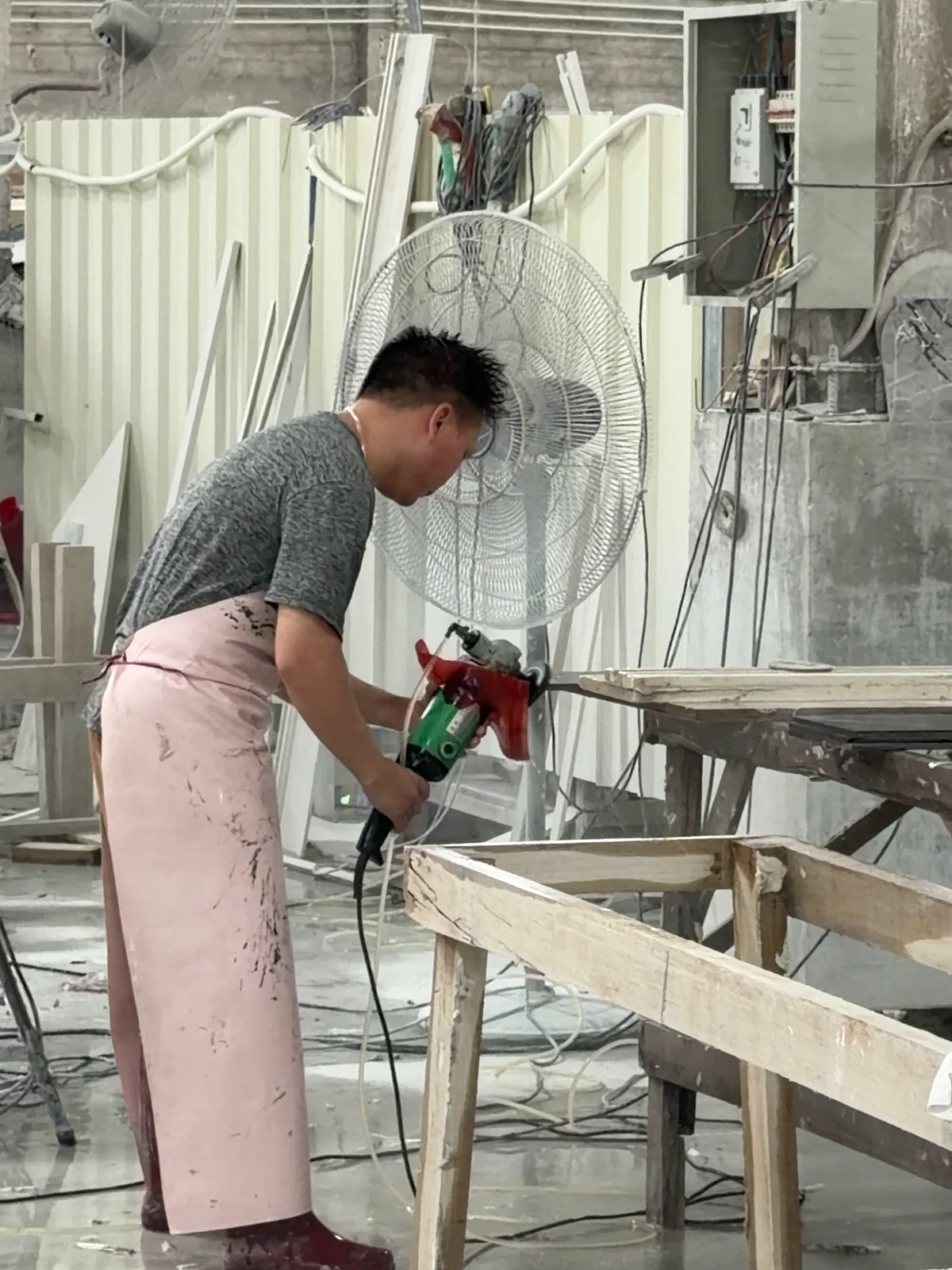
Look at a table edge in section and in the context of the complete piece. The film includes rounded lines, a shaped surface, hand working and sample comparisons. These details can help explain the profile you prefer, but the photographed curve does not establish the material, structural build-up or exact fabrication method of a proposed order.
Client-project furniture and the making process, filmed in our Foshan showroom and workshop.
Rounded profiles, surface work and samples from workshop visits.

01
Name the line you want to review.
Use a close photograph to identify the visible profile, then request a drawing that shows its actual shape. Describe the upper edge, the lower transition and the apparent thickness separately. A soft-looking outline can be achieved through different constructions, so avoid turning a visual label into an assumed technical detail. Keep the preferred reference beside the proposed drawing when comparing alternatives.
02
Read the edge with the base and surrounding seating.
A strong rounded top can feel different on a slender support than on a substantial base. Compare the complete elevation, not only the cropped corner. Mark nearby chairs or seating and ask for the relevant dimensions of the proposed piece. The edge you admire in a large workshop example may need a different proportion when used on a smaller table in a home.
03
Ask how surfaces meet at the curve.
Request information about visible joints, the underside and the transition between top and side surfaces. If a drawing uses several components, identify where their connections will appear. The hand-working view shows attention to a particular edge, but it cannot demonstrate the complete construction of another item. Review the actual detail rather than assuming every rounded form is cut from one solid block.

04
Choose the material and finish on their own evidence.
The film’s patterns and colours provide a starting point for comparison, not a verified material identification. Ask for the proposed material description, surface finish and sample reference. Consider how the edge and broad face will look together. If matching a particular reference is important, discuss how the actual surface selection and any acceptable variation will be reviewed before the order is approved.
05
Keep the edge detail in the approval package.
Include the profile drawing, overall dimensions, sample identifier and intended use in one record. Note questions about assembly, protection and handling for the actual item. Compare the packed components with the route into the room when that information is available. A clear edge brief helps production discussions, but it should remain linked to the complete table rather than becoming an isolated decorative instruction.
Your planning checklist.
Bring these details into the conversation.
- Profile and complete elevation
- Overall dimensions and base relationship
- Joints, underside and component arrangement
- Material description and finish sample
- Approval, packing and access questions
FOSHANPICK
A clearer brief. A better starting point.
FoshanPick is a furniture manufacturer with our own factory in Foshan. We design and make sofas, beds, dining tables and cabinetry for hotel, apartment and villa furniture projects, with quality control and export services. Share your plans, quantities and destination so we can confirm the furniture scope for your project.
Share your project briefBefore you choose.
Does a rounded edge prove solid-stone construction?
An edge shape proves nothing about construction. Confirm the actual material and component arrangement. The same broad visual idea may conceal different constructions, and a close photograph does not show every joint or underside detail.
Can I approve an edge from a photograph alone?
Use the image to explain the direction, then review the proposed drawing and relevant product information. Keep the profile connected to the full piece, dimensions and sample decision.
Sources and further reading
These references support the planning questions in this guide. They do not identify the materials, mechanisms or specifications of the furniture filmed here.
Start with your project list
Send your room list, drawings or reference photos to discuss custom furniture options and a quotation.