Furniture planning guide
Decorative Bedroom Pieces in Guestrooms and Villa Suites: Schedule the Ornament, Then Repeat It
Ornament repeated across rooms is a schedule decision, not a styling one.
On a programme with several room types, a carved headboard is approved in the main type, where it sits comfortably on a long wall. The same headboard is then repeated by schedule, and in the third room type its projecting side detail meets the swing of the entrance door. Nothing about the piece was wrong; it was simply never checked against every plan it would be repeated into. This guide treats decorative bedroom furniture for hotel guestrooms and villa suites as a schedule: how many times a motif repeats, which surfaces must survive daily cleaning, and how the headboard, bedside pieces and mirror are approved together from one sample set.
Client-project furniture and the making process, filmed in our Foshan showroom and workshop.
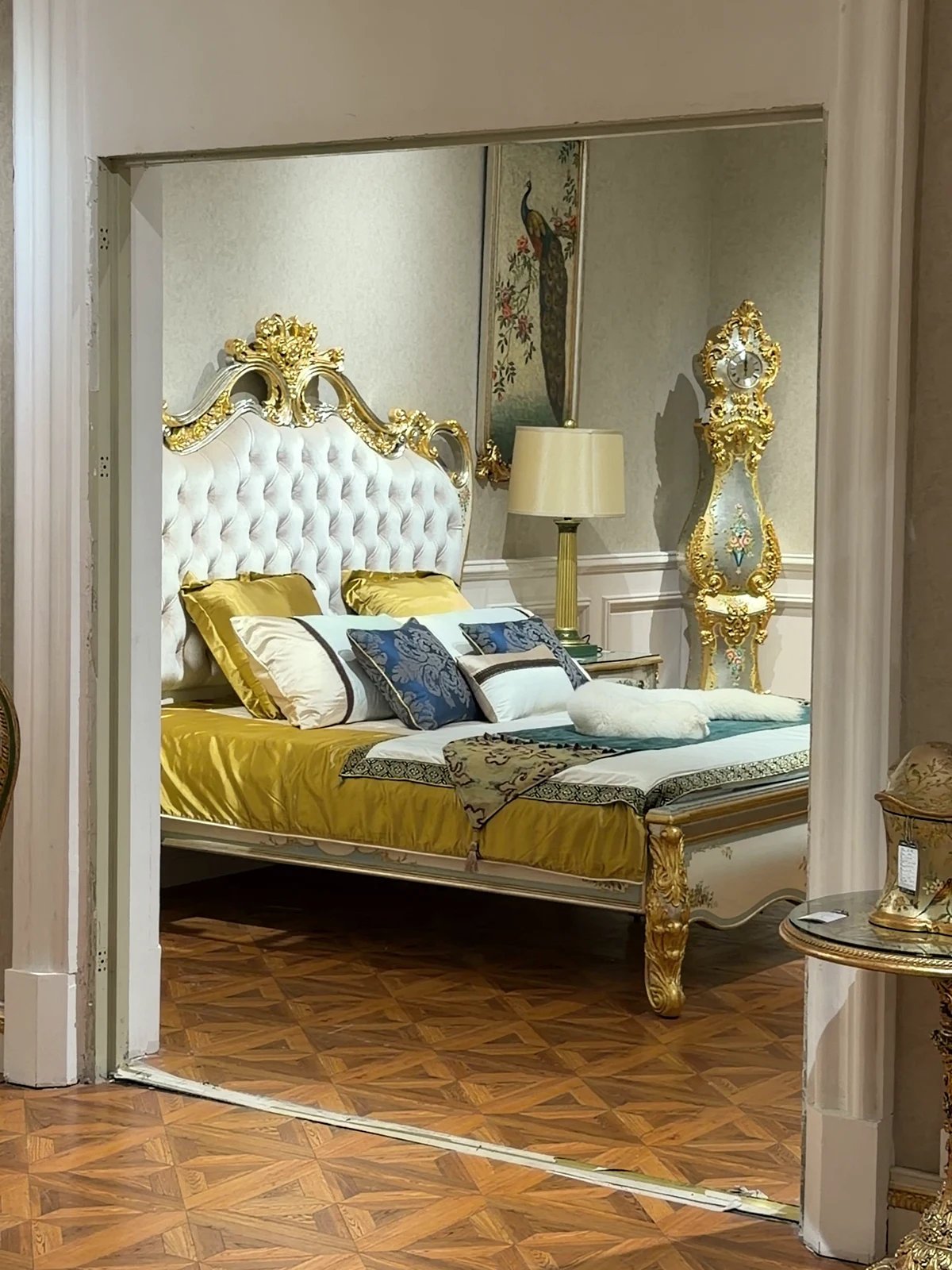
Decorative bedroom displays with curved outlines, floral details and mirrors.
01
Fix the full bed outline on every room-type plan.
Place the confirmed bed dimensions on each measured plan, including the whole headboard and any projecting side detail, not only the mattress footprint. Add bedding, bedside pieces and the route to the wardrobe, window and bathroom. A tall or wide headboard changes the balance of a room even when the mattress size stays the same, and the change differs from one room type to the next.
02
Decide how many times the motif repeats.
A floral panel that reads as a feature on one headboard can become noise when it also appears on the bedside chest, the mirror frame and the bench. On the schedule, name the pieces that carry the motif and the pieces that stay plain, per room type. Repeating a curve, a colour or an edge profile is often enough to connect the set without carrying the full ornament onto every item.

03
Separate the visible preference from the construction.
Mark the parts of the reference that matter — the top outline, colour placement, the floral panel, the contrast between surfaces — and keep them apart from the proposed construction. A photograph cannot establish solid timber, hand carving, a painted technique or a particular coating. Ask for the material and finish description of the actual item, especially where the dimensions are being adapted for a smaller room type.
04
Check door swings and access in every room type.
Draw every door that opens near the bed — entrance, bathroom, wardrobe, connecting door — at full swing, and check it against the headboard's widest point and the bedside pieces. Then check the attendant's side: making a bed around carved projections takes room to stand and to tuck linen. The room type where this fails is usually not the one the piece was designed in, which is why the check runs plan by plan.

05
Treat mirror and console as one composition.
Check the mirror from the bed, the entrance and the dressing position, and note what it reflects — a window, a lamp, the bathroom door. The console below still needs a usable standing position, drawers that open clear of the bed and a surface for the objects the room actually provides.
06
Specify surfaces for cleaning, not only for appearance.
Deep relief collects dust, and painted detail meets cloths and sprays every day. Agree with the operator how each decorative surface will be cleaned, then ask for care information for the actual finish rather than inferring durability from a showroom piece. Where a motif is hard to clean, consider limiting it to surfaces guests see but rarely touch.
07
Approve headboard, bedside and mirror from one sample set.
Review the finishes side by side under daylight and evening lighting, because reflections and contrast change how carved and painted detail reads. Approve the headboard, bedside pieces and mirror frame from one sample set, record the finish references against each schedule line, and check repeats and replacements against that record. Delivery access and installation arrangements for ornate pieces are confirmed separately rather than assumed to match a simpler-looking item.
Your planning checklist.
Bring these details into the conversation.
- Full bed and headboard outline checked on every room-type plan, with door swings
- Motif repeat count and plain pieces recorded on the schedule
- Material, finish and cleaning information confirmed for each decorative item
- Headboard, bedside pieces and mirror approved together from one sample set
FOSHANPICK
A clearer brief. A better starting point.
FoshanPick is a furniture manufacturer with our own factory in Foshan. We design and make sofas, beds, dining tables and cabinetry for hotel, apartment and villa furniture projects, with quality control and export services. Share your plans, quantities and destination so we can confirm the furniture scope for your project.
Share your project briefBefore you choose.
Does this footage show antique furniture?
Treat it as a showroom reference for visual coordination only. It does not establish age, carving method or material identity; specify from the material and finish description of the actual item being scheduled.
Sources and further reading
These references support the planning questions in this guide. They do not identify the materials, mechanisms or specifications of the furniture filmed here.
Start with your project list
Send your room list, drawings or reference photos to discuss custom furniture options and a quotation.