Furniture planning guide
Contemporary Chinese Furniture for a Hotel Restaurant or Villa Dining Room: Specifying the Direction
The direction lives in lines and proportions, not in a label.
A hotel's Chinese restaurant is where this direction is most often asked to perform: round tables anchoring the room, slatted cabinetry or screens carrying a repeated line, framed chairs softened by upholstery. It is also where a vague brief does the most damage — 'Chinese style' can be produced as carved ornament, as quiet minimal lines, or as almost anything between. The specifier's task is to convert the direction into lines, finishes and construction that a production line can follow.
Client-project furniture and the making process, filmed in our Foshan showroom and workshop.
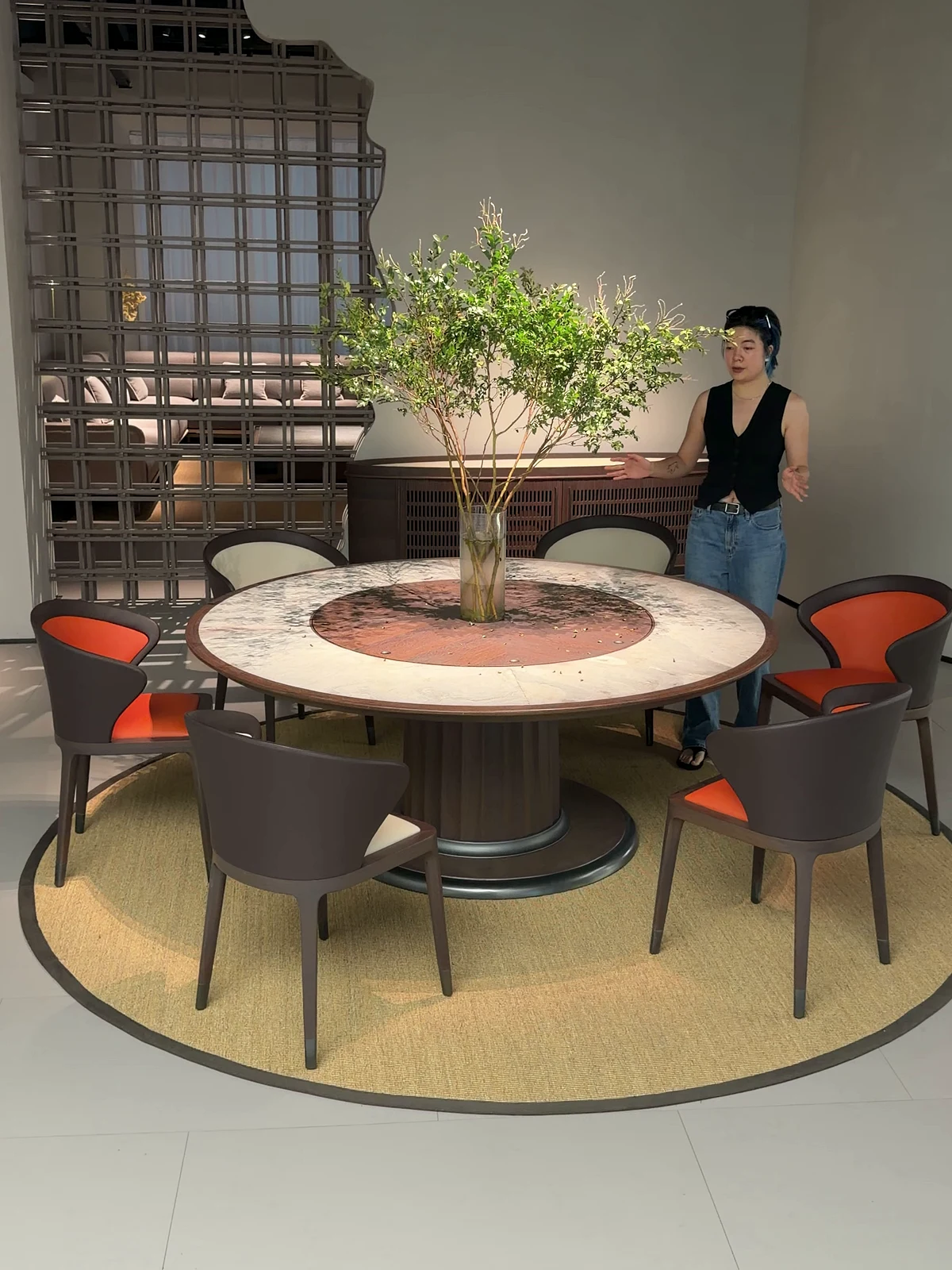
Dining, storage and framed seating in an Eastern-inspired showroom.
01
Anchor the room with one piece, dimensioned honestly.
The round dining arrangement in the film uses a visible base and a darker surrounding palette to give the room its point of focus. Decide which piece leads the room, then place chairs and circulation around it using that table's and those chairs' actual dimensions. Capacity is a product of the dimensioned drawing, never an estimate read off a filmed setting.
02
The repeated line is a construction decision.
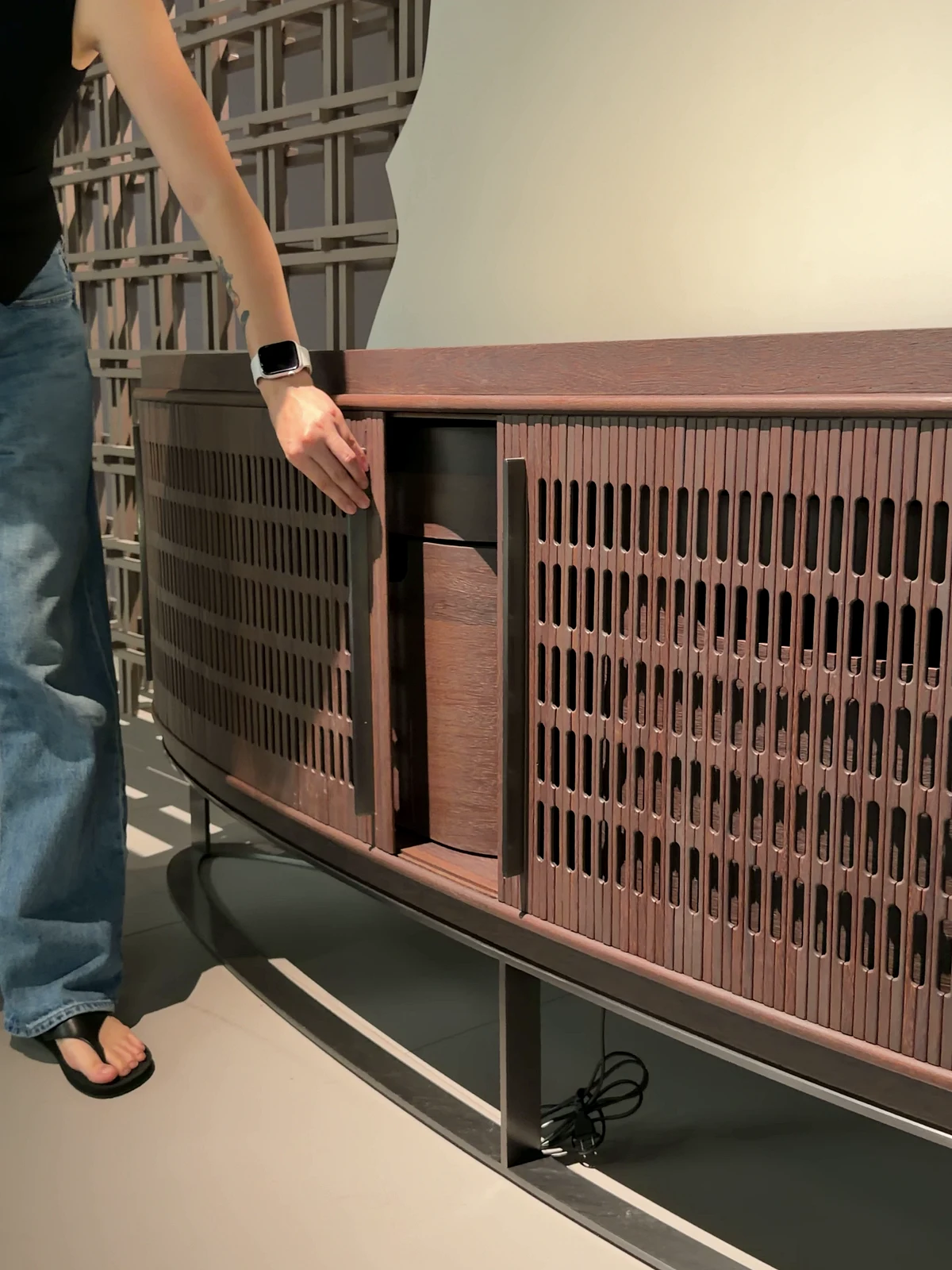
Slatted fronts create the rhythm across a large surface in the film. Before that rhythm enters a specification, confirm what the slats are: a decorative front, ventilation, glazing behind, or storage with a particular opening arrangement — the pattern alone cannot say. Compare the rhythm with chair backs and wall detail, and leave neighbouring surfaces quieter so the line stays readable at dining-room distance.
03
Upholstery is where the direction meets daily service.
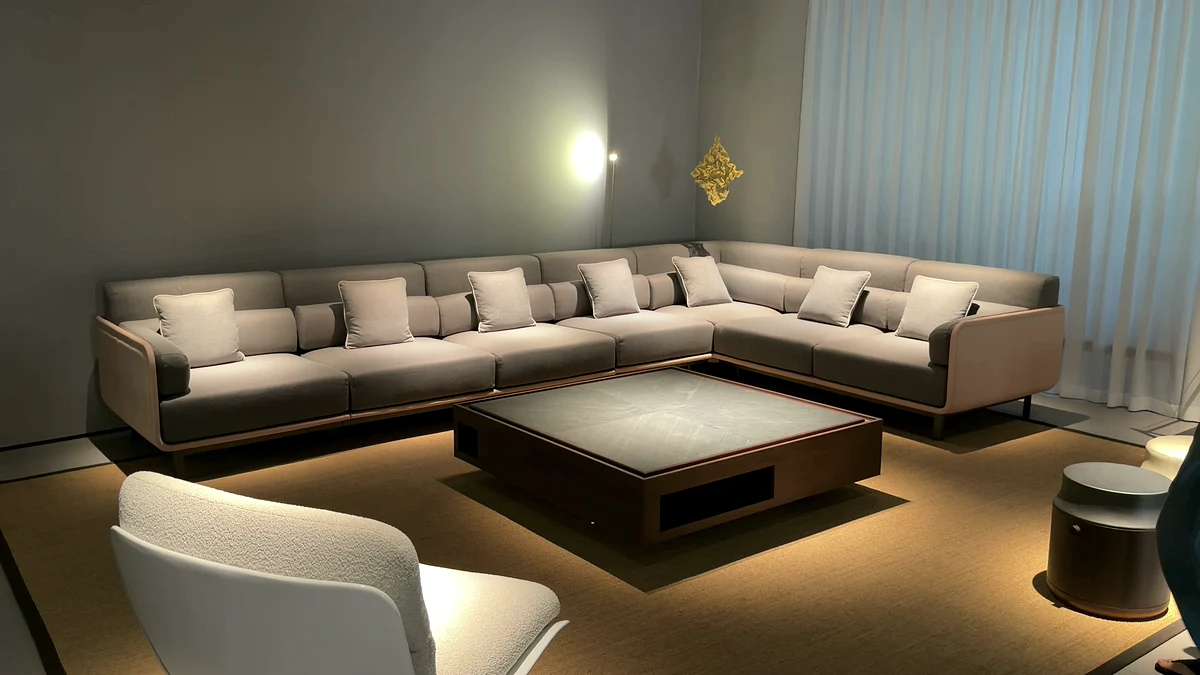
Lighter upholstery changes how framed seating reads against darker wood-toned pieces, and in a restaurant the same upholstery is sat in, brushed past and cleaned every service. Compare cushion thickness and frame outline beside the actual table, review physical finish references together, and confirm the upholstery construction and care information for the intended use. Colour is the visible decision; construction is the one the room will live with.
04
Give display objects a limit.
A patterned tabletop, a tall vessel or a sculptural piece can add a second point of attention to the room. In a working dining room, every surface is also a service surface — for dishes, for clearing, for reaching storage. Set the objects their places and their limit in the brief, so the direction is carried by the furniture and the decoration supports the service instead of competing with it.
05
Carry the language into the private room by naming what repeats.
A main dining room and its private rooms rarely take the same furniture, but they are expected to read as one restaurant. Name the elements that repeat — the slatted line, the finish tone, the chair frame's outline — and the elements that change with room size, such as table diameter and chair count. Written this way, the second room is a variation the production line can follow, not a fresh interpretation of the style brief.
06
Write the brief in production terms.
Record the silhouettes, line spacing, finish tone and dimensions you want to discuss, and confirm the proposed materials and construction for each item. FoshanPick can work from references like these in a design and manufacturing conversation. Keep provenance, historical naming and tradition claims out of the specification: they are not production information, and a contemporary piece described honestly needs none of them.
Your planning checklist.
Bring these details into the conversation.
- The anchor piece with its confirmed footprint and seating capacity
- Slatted elements specified by construction, not appearance alone
- Upholstery and frame references approved together
- Display objects limited to surfaces service does not need
- Repeating elements named for rooms that continue the direction
- Materials and construction confirmed per item, in writing
FOSHANPICK
A clearer brief. A better starting point.
FoshanPick is a furniture manufacturer with our own factory in Foshan. We design and make sofas, beds, dining tables and cabinetry for hotel, apartment and villa furniture projects, with quality control and export services. Share your plans, quantities and destination so we can confirm the furniture scope for your project.
Share your project briefBefore you choose.
Does contemporary Chinese mean antique or reproduction furniture?
No. It is contemporary production in a defined visual language. Age, maker and provenance are separate facts needing their own evidence, and none of them is required for the direction to work in a dining room.
Must every room in the project follow the same language?
Decide which lines and tones connect the rooms and which spaces can be quieter. A private room usually repeats fewer elements at a calmer level; what matters is that the repeated elements are named, not that every motif appears everywhere.
Can the slatted fronts serve as ventilation or storage in our project?
That is decided by the construction specified for the actual cabinet, not by the pattern. State the function the front must perform and confirm the construction that delivers it before the piece is produced.
Sources and further reading
These references support the planning questions in this guide. They do not identify the materials, mechanisms or specifications of the furniture filmed here.
Start with your project list
Send your room list, drawings or reference photos to discuss custom furniture options and a quotation.