Tables connect the seats around them. Begin with how you relax, serve and move through the room, then choose the right combination of shapes. Small tables are easy to treat as leftovers, chosen after the sofa and chairs — but they are the pieces you touch most: every drink, book and remote lands on one. Give them the same ten minutes of planning as the seating they serve.
The references show design directions. Sizes, construction, materials and project scope are confirmed for your order.
01
Dark pattern, slim supports.
A compact side table
A small square top with visible veining contrasts with the slender crossing supports. It offers a distinct accent beside a larger upholstered piece. A table at this scale works as a satellite — it can move to wherever a seat is added — so consider it a flexible piece rather than a fixed part of the layout.
For your layoutCheck its proposed height against the seat and arm beside it, and confirm the actual surface material separately — a photograph cannot tell you how a finish behaves with heat or rings.
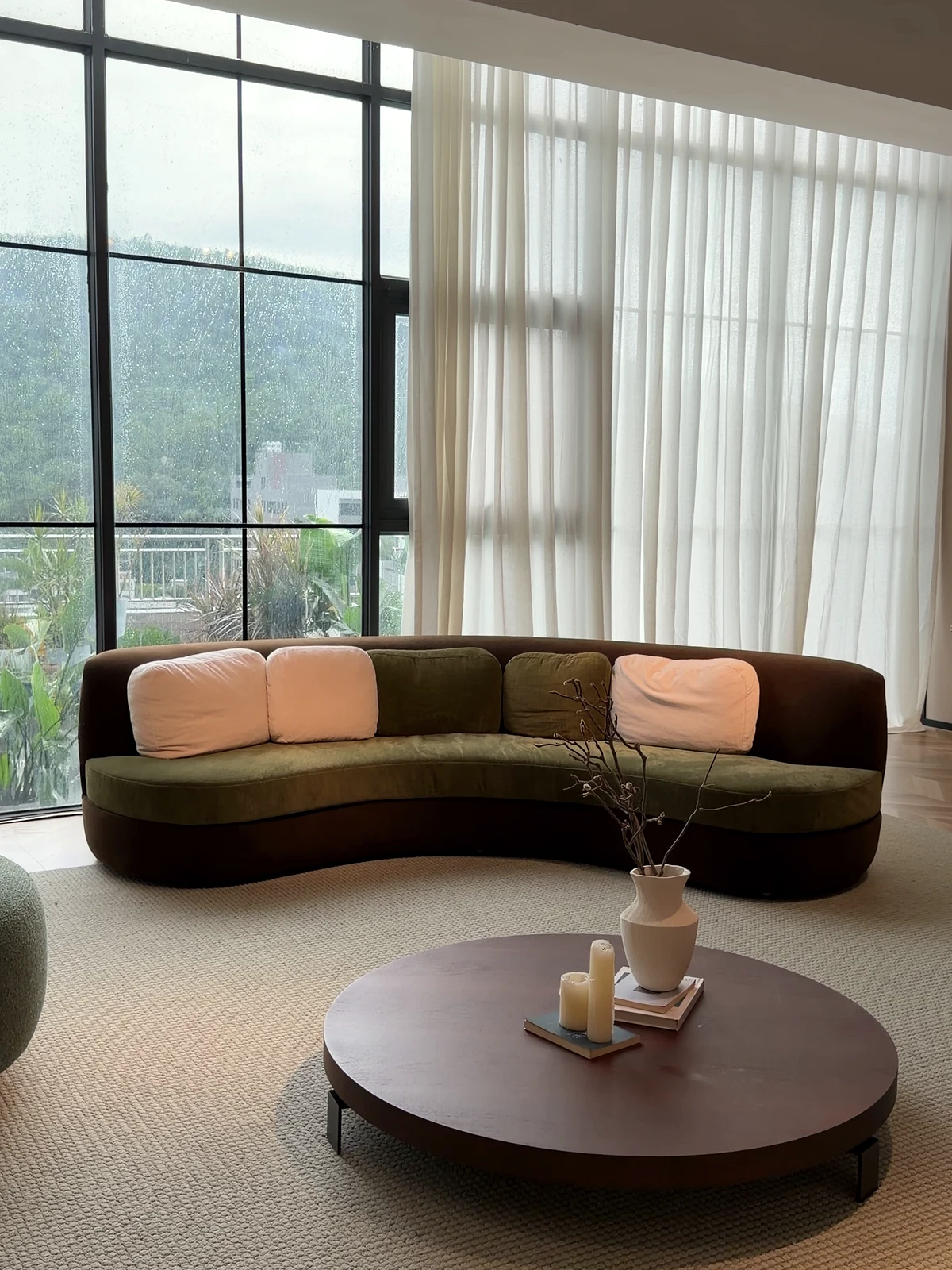
A dark brown circular table keeps the outline continuous around the seating. Compare its diameter with the whole seating group. A round centre table softens the geometry of a rectangular sofa arrangement and removes corners from the walking route, which is why it is so often the calm choice for family rooms.
For your layoutReview reach from every seat it serves, not only the sofa's centre, and the walking space left around the full circle.
The larger dark circular table has a stronger sculptural base. Give its supporting forms enough visible space rather than crowding it with other pieces. A base with presence also sets the room's tone from the doorway, so judge this direction from the entrance view as well as from the sofa.
For your layoutReview the complete footprint, the base near feet when seated, and whether the base leaves room for a rug to sit flat beneath it.
Tables connect the seats around them. Begin with how you relax, serve and move through the room, then choose the right combination of shapes. Small tables are easy to treat as leftovers, chosen after the sofa and chairs — but they are the pieces you touch most: every drink, book and remote lands on one. Give them the same ten minutes of planning as the seating they serve.
01
Daily use
Decide whether the surface mainly holds drinks, books or occasional serving. Plan useful space before decorative objects: a surface that is beautiful but fully dressed leaves nowhere for a cup. Planning example: two modest side tables flanking a sofa often serve a household better than one large centre table in a narrow room, because every seat gains its own surface.
02
Surfaces & care
Request the actual finish specification and care guidance for the option being considered. A visual texture does not establish the material or stain resistance, and the right care routine is part of the decision, especially in rooms that see daily use.
03
Edges & circulation
Consider prominent corners, children's routes and the distance between adjacent pieces as part of the layout. Walk the plan mentally at knee height: the route between sofa and door is where small tables either help or get in the way.
SEE IT IN CONTEXT
Explore the showroom in motion.
Living, dining and other pieces custom-made for client projects, filmed in our showroom before export.
No. A shared colour, curve or finish can connect different forms without making the whole room uniform. In fact, a centre table and side tables chosen from one identical set can look flatter than a considered mix — keep one element in common and let the shapes differ.
Can the reference be adapted to my sofa?+
Share the sofa dimensions, seat and arm heights, and a room photo. We can review the table proportions and placement with that information, including which seats each table should serve and where the walking routes fall.
How many tables does a seating group need?+
Work seat by seat rather than by a rule. Each regular seat benefits from a surface within reach; occasional seats can share. Send your seating plan with the seats you use daily marked, and we can map a table to each need instead of adding tables by habit.